
- Yarrow (Achillea millefolium) has a long history as an herbal remedy applied to the skin for wounds, cuts, and abrasions. The genus name Achillea is derived from the mythical Greek character, Achilles, who reportedly carried it with his army to treat battle wounds. Dried yarrow stalks are used as a randomizing agent in I Ching divination.
- Currently, there are no high-quality trials available investigating yarrow. Although a laboratory study demonstrated yarrow's antibacterial effects, one poor-quality study using an herbal combination of yarrow, juniper, and nettle did not find any benefit on plaque or gingivitis inhibition.
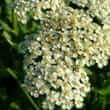
Ingredients
Yarrow (Achillea millefolium)
Explore the available health information, treatment context, and integrative evidence for Yarrow (Achillea millefolium).
Evidence Ledger
Grades describe the evidence for Yarrow (Achillea millefolium) relative to each listed condition or goal.
Background
References
- Boswell-Ruys CL, Ritchie HE, Brown-Woodman PD. Preliminary screening study of reproductive outcomes after exposure to yarrow in the pregnant rat. Birth Defects Res B Dev.Reprod.Toxicol. 2003;68(5):416-420.
View Abstract - Compes E, Bartolome B, Fernandez-Nieto M, et al. Occupational asthma from dried flowers of Carthamus tinctorious (safflower) and Achillea millefolium (yarrow). Allergy 2006;61(10):1239-1240.
View Abstract - Davies MG, Kersey PJ. Contact allergy to yarrow and dandelion. Contact Dermatitis 1986;14(4):256-257.
View Abstract - Dutkiewicz J, Krysinska-Traczyk E, Skorska C, et al. Exposure to airborne microorganisms and endotoxin in herb processing plants. Ann Agric.Environ Med 2001;8(2):201-211.
View Abstract - Final report on the safety assessment of Yarrow (Achillea millefolium) Extract. Int J Toxicol. 2001;20 Suppl 2:79-84.
View Abstract - Hausen BM. A 6-year experience with compositae mix. Am J Contact Dermat. 1996;7(2):94-99.
View Abstract - Hausen BM, Oestmann G. [The incidence of occupationally-induced allergic skin diseases in a large flower market]. Derm.Beruf.Umwelt. 1988;36(4):117-124.
View Abstract - Hausen BM, Breuer J, Weglewski J, et al. alpha-Peroxyachifolid and other new sensitizing sesquiterpene lactones from yarrow (Achillea millefolium L., Compositae). Contact Dermatitis 1991;24(4):274-280.
View Abstract - Jovanovic M, Poljacki M, Duran V, et al. Contact allergy to Compositae plants in patients with atopic dermatitis. Med Pregl. 2004;57(5-6):209-218.
View Abstract - Molochko VA, Lastochkina TM, Krylov IA, et al. [The antistaphylococcal properties of plant extracts in relation to their prospective use as therapeutic and prophylactic formulations for the skin]. Vestn.Dermatol.Venerol. 1990;(8):54-56.
View Abstract - Paulsen E, Andersen KE, Hausen BM. Compositae dermatitis in a Danish dermatology department in one year (I). Results of routine patch testing with the sesquiterpene lactone mix supplemented with aimed patch testing with extracts and sesquiterpene lactones of Compositae plants. Contact Dermatitis 1993;29(1):6-10.
View Abstract - Paulsen E, Andersen KE, Hausen BM. Sensitization and cross-reaction patterns in Danish Compositae-allergic patients. Contact Dermatitis 2001;45(4):197-204.
View Abstract - Schempp CM, Schopf E, Simon JC. [Plant-induced toxic and allergic dermatitis (phytodermatitis)]. Hautarzt 2002;53(2):93-97.
View Abstract - Uter W, Nohle M, Randerath B, et al. Occupational contact urticaria and late-phase bronchial asthma caused by compositae pollen in a florist. Am J Contact Dermat. 2001;12(3):182-184.
View Abstract - Van der Weijden GA., Timmer CJ, Timmerman MF, et al. The effect of herbal extracts in an experimental mouthrinse on established plaque and gingivitis. J Clin Periodontol. 1998;25(5):399-403.
View Abstract