
- Wormwood (Artemisia absinthium) is an active ingredient of absinthe, a liqueur, and, in the 18th and early 19th Centuries, it acquired a reputation for triggering psychotic events, called absinthism. Absinthe was banned throughout Western Europe. Modern analyses suggest that the hallucinogenic properties of absinthe are a myth and that the early studies confused the effects of drinking an excessive amount of absinthe from drinking absinthe. Absinthe has consequently returned to the market.
- Wormwood and several of its derivatives, including absinthinin, artemether, artesunate, and artemisinin, have been studied for their effects on various conditions. Artemisinin has been studied for treating malaria, including highly drug-resistant strains. Currently, preferred treatments for malaria are combination therapies that include artemisinin derivatives (artemisinin-combination therapies, or ACTs). Use of artemisinin alone is strongly discouraged by the World Health Organization (WHO), due to the potential for malarial parasites to develop resistance to the drug.
- At this time, there is insufficient available evidence on the use of Artemisia absinthium for any condition. More high-quality research is needed before firm conclusions can be made.
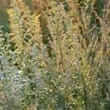
Ingredients
Wormwood
Explore the available health information, treatment context, and integrative evidence for Wormwood.
Evidence Ledger
Grades describe the evidence for Wormwood relative to each listed condition or goal.
Background
References
- Chung MJ, Kang AY, Park SO, et al. The effect of essential oils of dietary wormwood (Artemisia princeps), with and without added vitamin E, on oxidative stress and some genes involved in cholesterol metabolism. Food Chem Toxicol 2007;45(8):1400-1409. View Abstract
- Dettling A, Grass H, Schuff A, et al. Absinthe: attention performance and mood under the influence of thujone. J Stud Alcohol 2004;65(5):573-581. View Abstract
- Efferth T. Willmar Schwabe Award 2006: antiplasmodial and antitumor activity of artemisinin--from bench to bedside. Planta Med 2007;73(4):299-309. View Abstract
- Krebs S, Omer TN, Omer B. Wormwood (Artemisia absinthium) suppresses tumour necrosis factor alpha and accelerates healing in patients with Crohn's disease - A controlled clinical trial. Phytomedicine 2010;17(5):305-9. View Abstract
- Krishna S, Bustamante L, Haynes RK, et al. Artemisinins: their growing importance in medicine. Trends Pharmacol Sci 2008;29(10):520-527. View Abstract
- Lachenmeier DW. [Absinthe - history of dependence to thujone or to alcohol?]. Fortschr Neurol Psychiatr 2007;75(5):306-308. View Abstract
- Lachenmeier DW. [Thujone-attributable effects of absinthe are only an urban legend--toxicology uncovers alcohol as real cause of absinthism]. Med Monatsschr Pharm 2008;31(3):101-106. View Abstract
- Lundh K, Hindsen M, Gruvberger B, et al. Contact allergy to herbal teas derived from Asteraceae plants. Contact Dermatitis 2006;54(4):196-201. View Abstract
- Meschler JP, Howlett AC. Thujone exhibits low affinity for cannabinoid receptors but fails to evoke cannabimimetic responses. Pharmacol Biochem Behav 1999;62(3):473-480. View Abstract
- Mueller MS, Runyambo N, Wagner I, et al. Randomized controlled trial of a traditional preparation of Artemisia annua L. (Annual Wormwood) in the treatment of malaria. Trans R Soc Trop Med Hyg 2004;98(5):318-321. View Abstract
- Olsen OT, Frolund L, Heinig J, et al. A double-blind, randomized study investigating the efficacy and specificity of immunotherapy with Artemisia vulgaris or Phleum pratense/betula verrucosa. Allergol Immunopatho (Madr) 1995;23(2):73-78. View Abstract
- Omer B, Krebs S, Omer H, et al. Steroid-sparing effect of wormwood (Artemisia absinthium) in Crohn's disease: a double-blind placebo-controlled study. Phytomedicine 2007;14(2-3):87-95. View Abstract
- Rath K, Taxis K, Walz G, et al. Pharmacokinetic study of artemisinin after oral intake of a traditional preparation of Artemisia annua L. (annual wormwood). Am J Trop Med Hyg 2004;70(2):128-132. View Abstract
- Sundar SN, Marconett CN, Doan VB, et al. Artemisinin selectively decreases functional levels of estrogen receptor-alpha and ablates estrogen-induced proliferation in human breast cancer cells. Carcinogenesis 2008;29(12):2252-2258. View Abstract
- Weisbord SD, Soule JB, and Kimmel PL. Poison on line--acute renal failure caused by oil of wormwood purchased through the Internet. N Engl J Med 1997;337(12):825-827 View Abstract