
- The use of white water lily (Nymphaea odorata) for medicinal purposes originates from Native American traditional medicine.
- Several other species from the Nymphaea and Nuphar (another water lily genus) genera have been used in traditional Chinese medicine, Ayurveda, and homeopathic practices.
- The dried root and rhizome of the white water lily have been taken by mouth to treat gastrointestinal, genital, and bronchial conditions. The leaves and roots have also been used externally, as infusions to treat lesions and inflammation associated with mucous membranes, and as poultices to treat a variety of dermatological conditions.
- Some of the medicinal properties of white water lily may be attributed to its reported antibiotic and astringent properties, which may be the result of tannic and gallic acids found in the plant tissue.
Ingredients
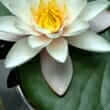
White water lily (Nymphaea odorata)
Explore the available health information, treatment context, and integrative evidence for White water lily (Nymphaea odorata).
Evidence Ledger
Grades describe the evidence for White water lily (Nymphaea odorata) relative to each listed condition or goal.
Background
References
- Bhandarkar MR, Khan A. Antihepatotoxic effect of Nymphaea stellata willd., against carbon tetrachloride-induced hepatic damage in albino rats. J Ethnopharmacol. 2004;91(1):61-64.
View Abstract - Dipasquale R. Nymphaea odorata: white pond lily. Medical herbalism 2000;11(3):6-7.
- Emboden WA. Transcultural use of narcotic water lilies in ancient Egyptian and Maya drug ritual. J Ethnopharmacol. 1981;3(1):39-83.
View Abstract - Khan N, Sultana S. Anticarcinogenic effect of Nymphaea alba against oxidative damage, hyperproliferative response and renal carcinogenesis in Wistar rats. Mol.Cell Biochem. 2005;271(1-2):1-11.
View Abstract - Zhang Z, ElSohly HN, Li XC, et al. Phenolic compounds from Nymphaea odorata. J Nat Prod 2003;66(4):548-550.
View Abstract