
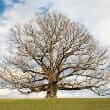
- Of the many species of oak found all over the world, the white oak (Quercus alba) is found primarily in North America. Although there are many species of the Quercus genus, many are thought to have similar properties. The parts of this tree used medicinally are the inner bark and the galls (growths that are produced in reaction to fungi or insects).
- Traditionally, Native Americans and European settlers have used white oak for its astringent and anti-inflammatory properties. White oak was listed in the United States Pharmacopoeia from 1820 to 1919, and also in the National Formulary from 1916 to 1936.
- Due to a lack of available scientific evidence, it is difficult to determine the safety of white oak. Adverse effects associated with white oak include gastrointestinal irritation, nausea and vomiting, which are theoretically due to its tannin content.
Ingredients
White oak
Explore the available health information, treatment context, and integrative evidence for White oak.
Evidence Ledger
Grades describe the evidence for White oak relative to each listed condition or goal.
Background
References
- Blumenthal M, et al, ed. The CompleteGerman Commission E Monographs: Therapeutic Guide to Herbal Medicine. Trans. S. Klein. Boston, MA: American Botanical Council, 1998
- Brinker F. Herb Contraindications and Drug Interactions. 2 ed. Sandy, OR: Eclectic Medical Publications, 1998.
- Garg SK, Makkar HP, Nagal KB, et al. Oak (Quercus incana) leaf poisoning in cattle. Vet.Hum.Toxicol. 1992;34(2):161-164.
View Abstract - Kinde H. A fatal case of oak poisoning in a double-wattled cassowary (Casuarius casuarius). Avian Dis. 1988;32(4):849-851.
View Abstract - Leung AY, Foster S. Encyclopedia of Common Natural Ingredients Used in Food, Drugs and Cosmetics. 2 ed. New York, NY: John Wiley & Sons, 1996.
- Lin RY, Clauss AE, Bennett ES. Hypersensitivity to common tree pollens in New York City patients. Allergy Asthma Proc 2002;23(4):253-258.
View Abstract - Loria RC, Wilson P, Wedner HJ. Identification of potential allergens in white oak (Quercus alba) pollen by immunoblotting. J Allergy Clin Immunol 1989;84(1):9-18.
View Abstract - Maciejewska A, Wojtczak J, Bielichowska-Cybula G, et al. [Biological effect of wood dust]. Med Pr 1993;44(3):277-288.
View Abstract - Mammela P, Tuomainen A, Vartiainen T, et al. Biological monitoring of wood dust exposure in nasal lavage by high-performance liquid chromatography. J Environ.Monit. 2002;4(2):187-189.
View Abstract - McCune LM, Johns T. Antioxidant activity in medicinal plants associated with the symptoms of diabetes mellitus used by the indigenous peoples of the North American boreal forest. J Ethnopharmacol. 2002;82(2-3):197-205.
View Abstract - McGuffin M, et al., ed. American Herbal Products Association's Botanical Safety Handbook. Boca Raton, FL: CRC Press, 1997.
- Schultz V, Hansel R, Tyler VE. Rational Phytotherapy: A Physician's Guide to Herbal Medicine. Terry C. Tegler, transl. 3 ed. Berlin, Germany: Springer, 1998.
- Vega A, Dominguez C, Cosmes P, et al. Anaphylactic reaction to ingestion of Quercus ilex acorn nut. Clin Exp Allergy 1998;28(6):739-742.
View Abstract - Weiss RF. Herbal Medicine. Beaconsfield, UK: Beaconsfield Publishers Ltd., 1988, 328-29.
- Wichtl MW. Herbal Drugs and Phytopharmaceuticals. Ed. N.M. Bissett. Stuttgart Medpharm GmbH Scientific Publishers, 1994.