
- There are several varieties of wheatgrass in the following plant genera: Agropyron, Elytrigia, Eremopyrum, Pascopyrum, and Pseudoroegneria. Wheatgrass is often used in vegan diets or other "living food" diets. Wheatgrass has become popularized in the United States and marketed toward the health-conscious individuals. In folk medicine, practitioners used wheatgrass to treat cystitis, gout, rheumatic pain, chronic skin disorders, and constipation.
- Despite its name, wheatgrass is gluten-free and is suitable for patients with gluten intolerance. Fresh leaf buds of this plant can be crushed to create a juice or dried to make a powder. The unprocessed plant contains high levels of cellulose, which cannot be digested. Wheatgrass juice is the juice extracted from the pulp of wheatgrass and has been used as a general-purpose health tonic for several years.
- Wheatgrass is a complete protein with about 30 enzymes, and it is about 70% crude chlorophyll. The chlorophyll molecule is similar in structure to hemoglobin, leading some to believe that wheatgrass helps blood flow, digestion and general detoxification of the body. However, despite wheatgrass' popularity in the United States, there are no high-quality clinical trials for wheatgrass.
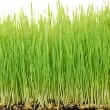
Ingredients
Wheatgrass (Triticum aestivum)
Explore the available health information, treatment context, and integrative evidence for Wheatgrass (Triticum aestivum).
Evidence Ledger
Grades describe the evidence for Wheatgrass (Triticum aestivum) relative to each listed condition or goal.
Background
References
- Ben Arye E, Goldin E, Wengrower D, et al. Wheat grass juice in the treatment of active distal ulcerative colitis: a randomized double-blind placebo-controlled trial. Scand.J Gastroenterol 2002;37(4):444-449.
View Abstract - Forgionne GA. Bovine cartilage, coenzyme Q10, and wheat grass therapy for primary peritoneal cancer. J Altern.Complement Med 2005;11(1):161-165.
View Abstract - Marawaha RK, Bansal D, Kaur S, et al. Wheat grass juice reduces transfusion requirement in patients with thalassemia major: a pilot study. Indian Pediatr. 2004;41(7):716-720.
View Abstract - Rauma AL, Nenonen M, Helve T, et al. Effect of a strict vegan diet on energy and nutrient intakes by Finnish rheumatoid patients. Eur.J Clin Nutr 1993;47(10):747-749.
View Abstract