
- Valerian is an herb native to Europe and Asia that currently grows in most parts of the world. The name is believed to come from the Latin word "valere" meaning to be healthy or strong. The root of the plant is believed to contain its active constituents. Use of valerian as a sedative and anti-anxiety treatment has been reported for more than 2,000 years. For example, in the 2nd Century AD, Galen recommended valerian as a treatment for insomnia. Related species have been used in traditional Chinese and Indian Ayurvedic medicine. Preparations for use on the skin have been used to treat sores and acne, and valerian by mouth has been used for other conditions such as digestive problems, flatulence (gas), congestive heart failure, urinary tract disorders, and angina (chest pain).
- Valerian extracts became popular in the United States and Europe in the mid-1800s and continued to be used by both physicians and the lay public until it was widely replaced by prescription sedative drugs. Valerian remains popular in North America, Europe, and Japan and is widely used to treat insomnia and anxiety. Although the active ingredients in valerian are not known, preparations are often standardized to the content of valerenic acid.
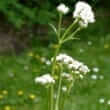
Ingredients
Valerian (Valeriana officinalis L.)
Explore the available health information, treatment context, and integrative evidence for Valerian (Valeriana officinalis L.).
Evidence Ledger
Grades describe the evidence for Valerian (Valeriana officinalis L.) relative to each listed condition or goal.
Background
References
- Andreatini R, Sartori VA, Seabra ML, et al. Effect of valepotriates (valerian extract) in generalized anxiety disorder: a randomized placebo-controlled pilot study. Phytother Res 2002;16(7):650-654.
View Abstract - Diaper A, Hindmarch I. A double-blind, placebo-controlled investigation of the effects of two doses of a valerian preparation on the sleep, cognitive and psychomotor function of sleep-disturbed older adults. Phytother.Res 2004;18(10):831-836.
View Abstract - Dominguez RA, Bravo-Valverde RL, Kaplowitz BR, et al. Valerian as a hypnotic for Hispanic patients. Cultur Divers Ethni Minor Psychol 2000;6(1):84-92.
View Abstract - Francis AJ, Dempster RJ. Effect of valerian, Valeriana edulis, on sleep difficulties in children with intellectual deficits: randomized trial. Phytomedicine 2002;9(4):273-279.
View Abstract - Eadie MJ. Could valerian have been the first anticonvulsant? Epilepsia 2004;45(11):1338-1343.
View Abstract - Garges HP, Varia I, Doraiswamy PM. Cardiac complications and delirium associated with valerian root withdrawal. JAMA 1998;280(18):1566-1567.
View Abstract - Garrard J, Harms S, Eberly LE, et al. Variations in product choices of frequently purchased herbs: caveat emptor. Arch Intern.Med 10-27-2003;163(19):2290-2295.
View Abstract - Giedke H, Breyer-Pfaff U. Critical evaluation of the effect of valerian extract on sleep structure and sleep quality. Pharmacopsychiatry 2000;33(6):239.
View Abstract - Gutierrez S, Ang-Lee MK, Walker DJ, et al. Assessing subjective and psychomotor effects of the herbal medication valerian in healthy volunteers. Pharmacol Biochem Behav 2004;78(1):57-64.
View Abstract - Kuhlmann J, Berger W, Podzuweit H, et al. The influence of valerian treatment on "reaction time, alertness and concentration" in volunteers. Pharmacopsychiatry 1999;32(6):235-241.
View Abstract - Muller D, Pfeil T, von den Driesch V. Treating depression comorbid with anxiety--results of an open, practice-oriented study with St John's wort WS 5572 and valerian extract in high doses. Phytomedicine 2003;10 Suppl 4:25-30.
View Abstract - Stevinson C, Ernst E. Valerian for insomnia: systematic review of randomized clinical trials. Sleep Med 2000;1:91-99.
View Abstract - Sun J. Morning/Evening menopausal formula relieves menopausal symptoms: a pilot study. J Altern Complement Med 2003;9(3):403-409.
- Taibi DM, Bourguignon C, Taylor AG. Valerian use for sleep disturbances related to rheumatoid arthritis. Holist Nurs Pract 2004;18(3):120-126.
View Abstract - Ziegler G, Ploch M, Miettinen-Baumann A, et al. Efficacy and tolerability of valerian extract LI 156 compared with oxazepam in the treatment of non-organic insomnia--a randomized, double-blind, comparative clinical study. Eur J Med Res 2002;7(11):480-486.
View Abstract