
- Tamarind is native to tropical Africa and grows wild throughout the Sudan. It was introduced to India thousands of years ago. In Jordan and other Middle Eastern countries, tamarind juice from the tamarind tree is made into a drink prepared by infusing dried tamarind pulp. It has also been used for the preservation of food products. Tamarind may be used as a paste and sauce and included in recipes. Tamarind is also used in India as part of Ayurvedic herbal medicine.
- In animal studies, tamarind has been found to lower serum cholesterol and blood sugar levels. Due to a lack of available human clinical trials, there is insufficient evidence to recommend tamarind for the treatment of hypercholesterolemia (high cholesterol) or diabetes.
- Based on human study, tamarind intake may delay the progression of fluorosis by enhancing excretion of fluoride. However, additional research is needed to confirm these results.
Ingredients
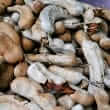
Tamarind (Tamarindus indica L.)
Explore the available health information, treatment context, and integrative evidence for Tamarind (Tamarindus indica L.).
Evidence Ledger
Grades describe the evidence for Tamarind (Tamarindus indica L.) relative to each listed condition or goal.
Background
References
- Araujo CL, Bezerra IW, Oliveira AS, et al. In vivo bioinsecticidal activity toward Ceratitis capitata (fruit fly) and Callosobruchus maculatus (cowpea weevil) and in vitro bioinsecticidal activity toward different orders of insect pests of a trypsin inhibitor purified from tamarind tree (Tamarindus indica) seeds. J Agric.Food Chem 6-1-2005;53(11):4381-4387.
View Abstract - Arimoto-Kobayashi S, Machida M, Okamoto K, et al. Evaluation of photo-mutagenicity and photo-cytotoxicity of food coloring agents. Mutagenesis 2005;20(3):229-233.
View Abstract - Chowdhury SR, Sarker DK, Chowdhury SD, et al. Effects of dietary tamarind on cholesterol metabolism in laying hens. Poult.Sci 2005;84(1):56-60.
View Abstract - Dini E, De Abreu J, Lopez E. [Osmolality of frequently consumed beverages]. Invest Clin 2004;45(4):323-335.
View Abstract - Fook JM, Macedo LL, Moura GE, et al. A serine proteinase inhibitor isolated from Tamarindus indica seeds and its effects on the release of human neutrophil elastase. Life Sci 5-6-2005;76(25):2881-2891.
View Abstract - Ghelardi E, Tavanti A, Davini P, et al. A mucoadhesive polymer extracted from tamarind seed improves the intraocular penetration and efficacy of rufloxacin in topical treatment of experimental bacterial keratitis. Antimicrob.Agents Chemother. 2004;48(9):3396-3401.
View Abstract - Izzo AA, Di Carlo G, Borrelli F, Ernst E. Cardiovascular pharmacotherapy and herbal medicines: the risk of drug interaction. Int J Cardiol 2005;98(1):1-14.
View Abstract - Khandare AL, Kumar PU, Shanker RG, et al. Additional beneficial effect of tamarind ingestion over defluoridated water supply to adolescent boys in a fluorotic area. Nutrition 2004;20(5):433-436.
View Abstract - Komutarin T, Azadi S, Butterworth L, et al. Extract of the seed coat of Tamarindus indica inhibits nitric oxide production by murine macrophages in vitro and in vivo. Food Chem Toxicol. 2004;42(4):649-658.
View Abstract - Maiti R, Jana D, Das UK, et al. Antidiabetic effect of aqueous extract of seed of Tamarindus indica in streptozotocin-induced diabetic rats. J Ethnopharmacol. 2004;92(1):85-91.
View Abstract - Nassereddin RA, Yamani MI. Microbiological quality of sous and tamarind, traditional drinks consumed in Jordan. J Food Prot. 2005;68(4):773-777.
View Abstract - Shivshankar P, Devi SC. Screening of stimulatory effects of dietary risk factors on mouse intestinal cell kinetics. World J Gastroenterol. 1-14-2005;11(2):242-248.
View Abstract - Shivshankar P, Shyamala Devi CS. Evaluation of co-stimulatory effects of Tamarindus indica L. on MNU-induced colonic cell proliferation. Food Chem Toxicol. 2004;42(8):1237-1244.
View Abstract - Strickland FM, Kuchel JM, Halliday GM. Natural products as aids for protecting the skin's immune system against UV damage. Cutis 2004;74(5 Suppl):24-28.
View Abstract - Useh NM, Nok AJ, Ambali SF, et al. The inhibition of Clostridium chauvoei (jakari strain) neuraminidase activity by methanolic extracts of the stem barks of Tamarindus indicus and Combretum fragrans. J Enzyme Inhib.Med Chem 2004;19(4):339-342.
View Abstract