
- Chinese star anise (Illicium verum) should not be confused with anise (Pimpenella anisum), a member of the carrot family, or with Japanese star anise (Illicium anisatum). Chinese star anise (star anise) is native to China and Vietnam and has been used for its carminative (reduces gas), stomachic (digestive aid), stimulant, and diuretic medicinal properties. Star anise is used by the Malays to combat stomachache due to the accumulation of intestinal gas, headache, and to promote vitality.
- Shikimic acid extracted from the pods (which wraps the seeds) of star anise is the starting material of Tamiflu®. Tamiflu® (Roche Laboratories) is an antiviral drug which has gained popularity with the recent spread of the bird flu (H5N1). Roche Laboratories and its partners mainly use the shikimic acid extracted from Chinese star anise. However, they are developing new technologies that use an E. coli bacteria that produces shikimic acid when overfed glucose.
- In September 2003, the U.S. Food and Drug Administration (FDA) advised consumers not to consume teas containing star anise. Such teas have been linked with serious neurological effects such as seizures, vomiting, jitteriness and rapid eye movement. Some reports have found Chinese star anise (Illicium verum) to be contaminated with Japanese star anise (Illicium anisatum), which is a known neurotoxin. Chinese star anise is recognized as safe for food use by the FDA, as acknowledged in the FDA's advisory. Chinese star anise is believed to help with colic in infants; however, the FDA is unaware of scientific evidence to support this claim. In addition, the FDA has not identified the specific type of star anise associated with the adverse effects. Similar reports of adverse effects have been found in Florida, Illinois, New Jersey and Washington in the United States as well as the Netherlands, Spain, and France.
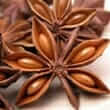
Ingredients
Star anise (Illicium verum)
Explore the available health information, treatment context, and integrative evidence for Star anise (Illicium verum).
Evidence Ledger
Grades describe the evidence for Star anise (Illicium verum) relative to each listed condition or goal.
Background
References
- Chang KS, Ahn YJ. Fumigant activity of (E)-anethole identified in Illicium verum fruit against Blattella germanica. Pest.Manag.Sci 2002;58(2):161-166.
View Abstract - De M, De AK, Sen P, et al. Antimicrobial properties of star anise (Illicium verum Hook f). Phytother Res 2002;16(1):94-95.
View Abstract - Garzo Fernandez C, Gomez Pintado P, Barrasa Blanco A, et al. [Cases of neurological symptoms associated with star anise consumption used as a carminative]. An.Esp.Pediatr. 2002;57(4):290-294.
View Abstract - Gil Campos M, Perez Navero JL, Ibarra De La Rosa I. [Convulsive status secondary to star anise poisoning in a neonate]. An.Esp.Pediatr. 2002;57(4):366-368.
View Abstract - Iauk L, Lo Bue AM, Milazzo I, et al. Antibacterial activity of medicinal plant extracts against periodontopathic bacteria. Phytother Res 2003;17(6):599-604.
View Abstract - Ize-Ludlow D, Ragone S, Bernstein JN, et al. M. Chemical composition of Chinese star anise (Illicium verum) and neurotoxicity in infants. JAMA 2-4-2004;291(5):562-563.
View Abstract - Ize-Ludlow D, Ragone S, Bruck IS, et al. Neurotoxicities in infants seen with the consumption of star anise tea. Pediatrics 2004;114(5):e653-e656.
View Abstract - Johanns ES, van der Kolk LE, van Gemert HM, et al. [An epidemic of epileptic seizures after consumption of herbal tea]. Ned.Tijdschr.Geneeskd. 4-27-2002;146(17):813-816.
View Abstract - Lee SW, Li G, Lee KS, et al. Preventive agents against sepsis and new phenylpropanoid glucosides from the fruits of Illicium verum. Planta Med 2003;69(9):861-864.
View Abstract - Lee SW, Li G, Lee KS, et al. A new phenylpropanoid glucoside from the fruits of Illicium verum. Arch Pharm Res 2003;26(8):591-593.
View Abstract - Minodier P, Pommier P, Moulene E, et al. [Star anise poisoning in infants]. Arch Pediatr. 2003;10(7):619-621.
View Abstract - Nam NH, Kim HM, Bae KH, et al. Inhibitory effects of Vietnamese medicinal plants on tube-like formation of human umbilical venous cells. Phytother Res 2003;17(2):107-111.
View Abstract - Park IK, Shin SC. Fumigant activity of plant essential oils and components from garlic (Allium sativum) and clove bud (Eugenia caryophyllata) oils against the Japanese termite (Reticulitermes speratus Kolbe). J Agric.Food Chem 6-1-2005;53(11):4388-4392.
View Abstract - Sy LK, Brown GD. Novel phenylpropanoids and lignans from Illicium verum. J Nat Prod 1998;61(8):987-992.
View Abstract - Zhou J, Lu G, Zhong X, et al. [Quantitative determination of anethole in the fruit of Illicium verum from various places of Guangxi province]. Zhong Yao Cai 2005;28(2):106-107.
View Abstract