
- Sea buckthorn (Hippophae rhamnoides) is found throughout Europe and Asia, particularly eastern Europe and central Asia. The plant's orange fruit and the oil from its pulp and seeds have been used traditionally for skin conditions, coughing, phlegm reduction, and digestive disorders.
- Sea buckthorn has been used for centuries in Mongolia, China, and Tibet. In Tibet, sea buckthorn is recommended for pulmonary disorders, cough, colds, fever, inflammation, abscesses, toxicity, constipation, tumors, and gynecological diseases. According to the Chinese Pharmacopeia, internal use of sea buckthorn is recommended as a pain reliever, cough suppressant, expectorant, digestive tonic, and blood flow promoter. In traditional Chinese medicine (TCM), sea buckthorn is mainly used as an expectorant and demulcent (soothing agent).
- In Russia, sea buckthorn seed and fruit oil have been used topically for eczema, psoriasis burns, frostbite, lupus, and cervical erosion, and internally for blood clots as well as eye disorders. In Tajikistan, sea buckthorn flowers are used to soften the skin. In other parts of central Asia, the leaves are used internally for gastrointestinal and skin disorders and topically for rheumatoid arthritis. In India, sea buckthorn fruit is used to treat lung, gastrointestinal, heart, blood, liver, and metabolic disorders.
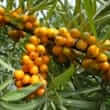
Ingredients
Sea buckthorn (Hippophae rhamnoides)
Explore the available health information, treatment context, and integrative evidence for Sea buckthorn (Hippophae rhamnoides).
Evidence Ledger
Grades describe the evidence for Sea buckthorn (Hippophae rhamnoides) relative to each listed condition or goal.
Background
References
- Boivin D, Blanchette M, Barrette S, et al. Inhibition of cancer cell proliferation and suppression of TNF-induced activation of NFkappaB by edible berry juice. Anticancer Res 2007;27(2):937-948.
View Abstract - Goel HC, Gupta D, Gupta S, et al. Protection of mitochondrial system by Hippophae rhamnoides L. against radiation-induced oxidative damage in mice. J Pharm.Pharmacol. 2005;57(1):135-143.
View Abstract - Hibasami H, Mitani A, Katsuzaki H, et al. Isolation of five types of flavonol from seabuckthorn (Hippophae rhamnoides) and induction of apoptosis by some of the flavonols in human promyelotic leukemia HL-60 cells. Int J Mol.Med 2005;15(5):805-809.
View Abstract - Kasparaviciene G, Briedis V, Ivanauskas L. [Influence of sea buckthorn oil production technology on its antioxidant activity]. Medicina (Kaunas.) 2004;40(8):753-757.
View Abstract - Larmo P, Alin J, Salminen E, et al. Effects of sea buckthorn berries on infections and inflammation: a double-blind, randomized, placebo-controlled trial. Eur J Clin Nutr 2008;62(9):1123-1130.
View Abstract - Li Y, Xu C, Zhang Q, et al. In vitro anti-Helicobacter pylori action of 30 Chinese herbal medicines used to treat ulcer diseases. J Ethnopharmacol 4-26-2005;98(3):329-333.
View Abstract - Mdinaradze N. Comprehensive treatment of generalized parodontitis. Georgian.Med News 2006;(135):60-63.
View Abstract - Padmavathi B, Upreti M, Singh V, et al. Chemoprevention by Hippophae rhamnoides: effects on tumorigenesis, phase II and antioxidant enzymes, and IRF-1 transcription factor. Nutr.Cancer 2005;51(1):59-67.
View Abstract - Suomela JP, Ahotupa M, Yang B, et al. Absorption of flavonols derived from sea buckthorn (Hippophae rhamnoides L.) and their effect on emerging risk factors for cardiovascular disease in humans. J Agric Food Chem 9-20-2006;54(19):7364-7369.
View Abstract - Teng BS, Lu YH, Wang ZT, et al. In vitro anti-tumor activity of isorhamnetin isolated from Hippophae rhamnoides L. against BEL-7402 cells. Pharmacol Res 2006;54(3):186-194.
View Abstract - Tiitinen KM, Hakala MA, Kallio HP. Quality components of sea buckthorn (Hippophae rhamnoides) varieties. J Agric.Food Chem. 3-9-2005;53(5):1692-1699.
View Abstract - Vijayaraghavan R, Gautam A, Kumar O, et al. Protective effect of ethanolic and water extracts of sea buckthorn (Hippophae rhamnoides L.) against the toxic effects of mustard gas. Indian J Exp Biol 2006;44(10):821-831.
View Abstract - Wang ZY, Luo XL, He CP. [Management of burn wounds with Hippophae rhamnoides oil]. Nan.Fang Yi.Ke.Da Xue.Xue.Bao. 2006;26(1):124-125.
View Abstract - Zeb, A. Anticarcinogenic potential of lipids from Hippophae--evidence from the recent literature. Asian Pac.J Cancer Prev. 2006;7(1):32-35.
View Abstract - Zhang P, Mao YC, Sun B, et al. [Changes in apoptosis-related genes expression profile in human breast carcinoma cell line Bcap-37 induced by flavonoids from seed residues of Hippophae Rhamnoides L]. Ai.Zheng. 2005;24(4):454-460.
View Abstract