
- In folk medicine, pokeweed leaves have been used for rheumatism, arthritis, emesis (vomiting) and purging. Unsubstantiated reports describe the toxicity of pokeweed root and berries, which may be due to the saponin content of the plant.
- One derivative of pokeweed, pokeweed antiviral protein (PAP) from the spring leaves of Phytolacca Americana, shows promising therapeutic effects. Interest in PAP is growing due to its use as a potential anti-HIV agent. However, the clinical use of native PAP is limited due to inherent difficulties in obtaining sufficient quantities of homogeneously pure active PAP without batch-to-batch variation from its natural resource.
- The United Kingdom allows pokeweed in medicinal products where toxic constituents are absent and the product adheres to mandated limits. Ongoing research is investigating the use of pokeweed for the flu, HSV-1, and polio.
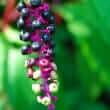
Ingredients
Pokeweed (Phytolacca americana)
Explore the available health information, treatment context, and integrative evidence for Pokeweed (Phytolacca americana).
Evidence Ledger
Grades describe the evidence for Pokeweed (Phytolacca americana) relative to each listed condition or goal.
Background
References
- Barkhordari A, Stoddart RW, McClure SF, McClure J. Lectin histochemistry of normal human lung. J Mol.Histol. 2004;35(2):147-156.
View Abstract - Cho SY, Sim JS, Kang SS, et al. Enhancement of heparin and heparin disaccharide absorption by the Phytolacca americana saponins. Arch Pharm Res 2003;26(12):1102-1108.
View Abstract - D'Cruz OJ, Uckun FM. Pokeweed antiviral protein: a potential nonspermicidal prophylactic antiviral agent. Fertil.Steril. 2001;75(1):106-114.
View Abstract - D'Cruz OJ, Waurzyniak B, Uckun FM. Mucosal toxicity studies of a gel formulation of native pokeweed antiviral protein. Toxicol.Pathol. 2004;32(2):212-221.
View Abstract - Erko B, Abebe F, Berhe N, et al. Control of Schistosoma mansoni by the soapberry Endod (Phytolacca dodecandra) in Wollo, northeastern Ethiopia: post-intervention prevalence. East Afr.Med J 2002;79(4):198-201.
View Abstract - Esser KB, Semagn K, Wolde-Yohannes L. Medicinal use and social status of the soap berry endod (Phytolacca dodecandra) in Ethiopia. J Ethnopharmacol. 2003;85(2-3):269-277.
View Abstract - Ndekha A, Hansen EH, Molgaard P, et al. Community participation as an interactive learning process: experiences from a schistosomiasis control project in Zimbabwe. Acta Trop. 2003;85(3):325-338.
View Abstract - Rajamohan F, Doumbia SO, Engstrom CR, et al. Expression of biologically active recombinant pokeweed antiviral protein in methylotrophic yeast Pichia pastoris. Protein Expr.Purif. 2000;18(2):193-201.
View Abstract - Rau E. Treatment of acute tonsillitis with a fixed-combination herbal preparation. Adv.Ther 2000;17(4):197-203.
View Abstract - Schlick J, Dulieu P, Desvoyes B, et al. Cytotoxic activity of a recombinant GnRH-PAP fusion toxin on human tumor cell lines. FEBS Lett. 4-28-2000;472(2-3):241-246.
View Abstract - Sussner U, Abel G, Schulte R, Kreis W. Isolation and characterisation of a cysteine protease (phytolacain G), from Phytolacca americana roots. Planta Med 2004;70(10):942-947.
View Abstract - Tadeg H, Mohammed E, Asres K, et al. Antimicrobial activities of some selected traditional Ethiopian medicinal plants used in the treatment of skin disorders. J Ethnopharmacol. 8-22-2005;100(1-2):168-175.
View Abstract - Treyvaud V, Marston A, Dyatmiko W, et al. Molluscicidal saponins from Phytolacca icosandra. Phytochemistry 2000;55(6):603-609.
View Abstract - Woldeamanuel Y, Abate G, Chryssanthou E. In vitro activity of Phytolacca dodecandra (Endod) against dermatophytes. Ethiop.Med J 2005;43(1):31-34.
View Abstract - Yang WH, Wieczorck M, Allen MC, et al. Cytotoxic activity of gonadotropin-releasing hormone (GnRH)-pokeweed antiviral protein conjugates in cell lines expressing GnRH receptors. Endocrinology 2003;144(4):1456-1463.
View Abstract