
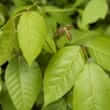
- Poison ivy (Toxicodendron radicans) is a plant native to North America that grows well in most areas. Its leaves are arranged in groups of three and vary in size and color during the season. In spring to summer, the leaves are small and red, eventually turning green, glossy, and smooth. In the fall, the leaves may turn red, orange, yellow, or brown.
- Poison ivy contains compounds that cause allergic reactions. In the United States and Canada, poison ivy is one of the most common causes of skin rash. Potentially serious reactions may result when poison ivy is used on the skin or eyes or if it is taken by mouth or inhaled.
Ingredients
Poison ivy (Toxicodendron radicans)
Explore the available health information, treatment context, and integrative evidence for Poison ivy (Toxicodendron radicans).
Evidence Ledger
Grades describe the evidence for Poison ivy (Toxicodendron radicans) relative to each listed condition or goal.
Background
References
- Amrol D, Keitel D, Hagaman D, et al. Topical pimecrolimus in the treatment of human allergic contact dermatitis. Ann Allergy Asthma Immunol 2003;91(6):563-566.
View Abstract - Briant D, Brouder G. Identification and treatment of poison ivy dermatitis. Nurse Pract 1983;8(7):13, 16, 19.
View Abstract - Canavan D, Yarnell E. Successful treatment of poison oak dermatitis treated with Grindelia spp. (Gumweed). J Altern Complement Med 2005;11(4):709-710.
View Abstract - Cardinali C, Francalanci S, Giomi B, et al. Contact dermatitis from Rhus toxicodendron in a homeopathic remedy. J Am Acad Dermatol 2004;50(1):150-151.
View Abstract - Cardinali C, Francalanci S, Giomi B, et al. Systemic contact dermatitis from herbal and homeopathic preparations used for herpes virus treatment. Acta Derm Venereol 2004;84(3):223-226.
View Abstract - Davenport P, Land KJ. Isolation of Leclercia adecarboxylata from the blood culture of an asymptomatic platelet donor. Transfusion 2007;47(10):1816-1819.
View Abstract - Gladman AC. Toxicodendron dermatitis: poison ivy, oak, and sumac. Wilderness Environ Med 2006;17(2):120-128.
View Abstract - Grater WC. Hypersensitivity dermatitis from American weeds other than poison ivy. Ann Allergy 1975;35(3):159-164.
View Abstract - Hershko K, Weinberg I, Ingber, A. Exploring the mango-poison ivy connection: the riddle of discriminative plant dermatitis. Contact Dermatitis 2005;52(1):3-5.
View Abstract - Johnson RA, Haer H, Kirkpatrick CH, et al. Comparison of the contact allergenicity of the four pentadecylcatechols derived from poison ivy urushiol in human subjects. J Allergy Clin Immunol 1972;49(1):27-35.
View Abstract - Mohan JE, Ziska, LH, Schlesinger WH, et al. Biomass and toxicity responses of poison ivy (Toxicodendron radicans) to elevated atmospheric CO2. Proc Natl Acad Sci USA 2006;103(24):9086-9089.
View Abstract - Oka K, Saito F, Yasuhara, T, et al. A study of cross-reactions between mango contact allergens and urushiol. Contact Dermatitis 2004;51(5-6):292-296.
View Abstract - Skin protectant drug products for over-the-counter human use; final monograph. Final rule. Fed Regist;2003;68(107):33362-33381.
View Abstract - Werchniak AE, Schwarzenberger K. Poison ivy: an underreported cause of erythema multiforme. J Am Acad Dermatol 2004;51(5 Suppl):S159-S160.
View Abstract - Wooldridge WE. Acute allergic contact dermatitis. How to manage severe cases. Postgrad Med 1990;87(4):221-224.
View Abstract