
- Podophyllum gets its name from the Greek words podos and phyllon, meaning foot shaped leaves. Podophyllum rhizomes have a long medicinal history among native North American tribes who used a rhizome powder as a laxative or an agent that expels worms (anthelmintic). A poultice of the powder was also used to treat warts and tumorous growths on the skin.
- Podophyllotoxin is a plant-derived compound used to produce two cytostatic drugs, etoposide and teniposide. The substance has been primarily obtained from the American mayapple (Podophyllum peltatum). The Himalayan mayapple (Podophyllum hexandrum or Podophyllum emodi) contains this constituent in a much greater quantity, but is endangered in the wild.
- Currently, extracts of the podophyllum plant are used in topical medications for genital warts, HIV-related oral hairy leukoplakia, and some skin cancers. Preliminary research also shows that CPH 82, an oral form of Podophyllum emodi composed of two purified semisynthetic lignan glycosides, may be useful in treating rheumatoid arthritis. However, when used orally, podophyllum can be lethal and should be avoided. The drug etoposide (VePesid®) is the semisynthetic derivative of podophyllotoxin, and is approved by the U.S. Food and Drug Administration (FDA) for various types of cancer.
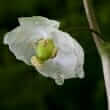
Ingredients
Podophyllum (Podophyllum hexandrum, Podophyllum peltatum)
Explore the available health information, treatment context, and integrative evidence for Podophyllum (Podophyllum hexandrum, Podophyllum peltatum).
Evidence Ledger
Grades describe the evidence for Podophyllum (Podophyllum hexandrum, Podophyllum peltatum) relative to each listed condition or goal.
Background
References
- Agrawala PK, Mittal A, Bala M, et al. Mitochondrial involvement in RP-1 mediated apoptosis in U 87 cells. Biomed.Pharmacother. 2004;58(2):129-135.
View Abstract - Camporese A, Balick MJ, Arvigo R, et al. Screening of anti-bacterial activity of medicinal plants from Belize (Central America). J Ethnopharmacol. 2003;87(1):103-107.
View Abstract - Chattopadhyay S, Bisaria VS, Panda AK, et al. Cytotoxicity of in vitro produced podophyllotoxin from Podophyllum hexandrum on human cancer cell line. Nat.Prod.Res. 2004;18(1):51-57.
View Abstract - Frasca T, Brett AS, Yoo SD. Mandrake toxicity. A case of mistaken identity. Arch Intern Med 9-22-1997;157(17):2007-2009.
View Abstract - Goel HC, Prasad J, Sharma A, et al. Antitumour and radioprotective action of Podophyllum hexandrum. Indian J Exp Biol 1998;36(6):583-587.
View Abstract - Gupta D, Arora R, Garg AP, et al. Radiation protection of HepG2 cells by Podophyllum hexandrum Royale. Mol.Cell Biochem. 2003;250(1-2):27-40.
View Abstract - Kumar IP, Goel HC. Iron chelation and related properties of Podophyllum hexandrum, a possible role in radioprotection. Indian J Exp Biol 2000;38(10):1003-1006.
View Abstract - Longstaff E, von Krogh G. Condyloma eradication: self-therapy with 0.15-0.5% podophyllotoxin versus 20-25% podophyllin preparations--an integrated safety assessment. Regul.Toxicol.Pharmacol 2001;33(2):117-137.
View Abstract - Mittal A, Pathania V, Agrawala PK, et al. Influence of Podophyllum hexandrum on endogenous antioxidant defence system in mice: possible role in radioprotection. J Ethnopharmacol. 2001;76(3):253-262.
View Abstract - Moraes RM, Bedir E, Barrett H, et al. Evaluation of Podophyllum peltatum accessions for podophyllotoxin production. Planta Med 2002;68(4):341-344.
View Abstract - Prakash H, Ali A, Bala M, et al. Anti-inflammatory effects of Podophyllum hexandrum (RP-1) against lipopolysaccharides induced inflammation in mice. J Pharm Pharm Sci 2005;8(1):107-114.
View Abstract - Prem Kumar I, Rana SV, Samanta N, et al. Enhancement of radiation-induced apoptosis by Podophyllum hexandrum. J Pharm Pharmacol 2003;55(9):1267-1273.
View Abstract - Triantos D, Porter SR, Scully C, et al. Oral hairy leukoplakia: clinicopathologic features, pathogenesis, diagnosis, and clinical significance. Clin Infect.Dis. 1997;25(6):1392-1396.
View Abstract - White DJ, Billingham C, Chapman S, et al. Podophyllin 0.5% or 2.0% v podophyllotoxin 0.5% for the self treatment of penile warts: a double blind randomised study. Genitourin.Med 1997;73(3):184-187.
View Abstract - Wollina U. Er:YAG laser followed by topical podophyllotoxin for hard-to-treat palmoplantar warts. J Cosmet.Laser Ther. 2003;5(1):35-37.
View Abstract