
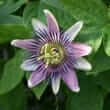
- The dried aerial parts of passion flower (Passiflora incarnata) have historically been used as a sedative and hypnotic (for insomnia) and for "nervous" gastrointestinal complaints. However, clinical evidence supporting any therapeutic use in humans is lacking. Early evidence suggests that passion flower may have a benzodiazepine-like calming action.
- Evidence for significant side effects is also unclear, and is complicated by the variety of poorly classified, potentially active constituents in different Passiflora species.
- Passion fruit (Passiflora
edulis Sims), a related species, is used to flavor food.
Ingredients
Passion flower (Passiflora incarnata L.)
Explore the available health information, treatment context, and integrative evidence for Passion flower (Passiflora incarnata L.).
Evidence Ledger
Grades describe the evidence for Passion flower (Passiflora incarnata L.) relative to each listed condition or goal.
Background
References
- Capasso A, Sorrentino L. Pharmacological studies on the sedative and hypnotic effect of Kava kava and Passiflora extracts combination. Phytomedicine 2005 Jan;12(1-2):39-45.
View Abstract - Dhawan K, Kumar S, Sharma A. Reversal of cannabinoids (delta9-THC) by the benzoflavone moiety from methanol extract of Passiflora incarnata Linneaus in mice: a possible therapy for cannabinoid addiction. J Pharm Pharmacol 2002;54(6):875-881.
View Abstract - Dhawan K, Kumar S, Sharma A. Suppression of alcohol-cessation-oriented hyper-anxiety by the benzoflavone moiety of Passiflora incarnata Linneaus in mice. J Ethnopharmacol 2002;81(2):239-244.
View Abstract - Dhawan K, Sharma A. Antitussive activity of the methanol extract of Passiflora incarnata leaves. Fitoterapia 2002;73(5):397-399.
View Abstract - Dhawan K, Kumar S, Sharma, A. Antiasthmatic activity of the methanol extract of leaves of Passiflora incarnata. Phytother Res 2003;17(7):821-822.
View Abstract - Dhawan K, Kumar S, Sharma A. Aphrodisiac activity of methanol extract of leaves of Passiflora incarnata Linn in mice. Phytother Res 2003;17(4):401-403.
View Abstract - Giavina-Bianchi PF Jr, Castro FF, Machado ML, et al. Occupational respiratory allergic disease induced by Passiflora alata and Rhamnus purshiana. Ann Allergy Asthma Immunol 1997;79(5):449-454.
View Abstract - Gow PJ, Connelly NJ, Hill RL, et al. Fatal fulminant hepatic failure induced by a natural therapy containing kava. Med J Aust 5-5-2003;178(9):442-443.
View Abstract - Hidaka M, Fujita K, Ogikubo T, et al. Potent inhibition by star fruit of human cytochrome P450 3A (CYP3A) activity. Drug Metab Dispos 2004 Jun;32(6):581-3.
View Abstract - Kapadia GJ, Azuine MA, Tokuda H, et al. Inhibitory effect of herbal remedies on 12-O-tetradecanoylphorbol-13-acetate-promoted Epstein-Barr virus early antigen activation. Pharmacol Res 2002;45(3):213-220.
View Abstract - Krenn L. [Passion Flower (Passiflora incarnata L.)--a reliable herbal sedative]. Wien Med Wochenschr 2002;152(15-16):404-406.
View Abstract - Mourvaki E, Gizzi S, Rossi R, et al. Passionflower fruit-a "new" source of lycopene? J Med Food 2005 Spring;8(1):104-6.
View Abstract - Smith GW, Chalmers TM, Nuki G. Vasculitis associated with herbal preparation containing Passiflora extract. Br J Rheumatol 1993;32(1):87-88.
View Abstract - Talcott ST, Percival SS, Pittet-Moore J, et al. Phytochemical composition and antioxidant stability of fortified yellow passion fruit (Passiflora edulis). J Agric.Food Chem 2-12-2003;51(4):935-941.
View Abstract - Werneke U, Turner T, Priebe S. Complementary medicines in psychiatry: review of effectiveness and safety. Br J Psychiatry 2006 Feb;188:109-21.
View Abstract