
- Aberer W. Occupational dermatitis from organically grown parsnip (Pastinaca sativa L.). Contact Dermatitis 1992;26(1):62.
View Abstract - Bang Pedersen N, Pla Arles UB. Phototoxic reaction to parsnip and UV-A sunbed. Contact Dermatitis 1998;39(2):97.
View Abstract - Egan CL, Sterling G. Phytophotodermatitis: a visit to Margaritaville. Cutis 1993;51(1):41-42.
View Abstract - Eriksson NE. Clustering of foodstuffs in food hypersensitivity. An inquiry study in pollen allergic patients. Allergol.Immunopathol.(Madr.) 1984;12(1):28-32.
View Abstract - Gral N, Beani JC, Bonnot D, et al. [Plasma levels of psoralens after celery ingestion]. Ann.Dermatol Venereol 1993;120(9):599-603.
View Abstract - Hannuksela M, Lahti A. Immediate reactions to fruits and vegetables. Contact Dermatitis 1977;3(2):79-84.
View Abstract - Lutchman L, Inyang V, Hodgkinson D. Phytophotodermatitis associated with parsnip picking. J.Accid.Emerg.Med. 1999;16(6):453-454.
View Abstract - Poljacki M, Paravina M, Jovanovic M, et al. [Contact allergic dermatitis caused by plants]. Med Pregl. 1993;46(9-10):371-375.
View Abstract - Poniecka H. [Plants as the cause of contact allergy diagnosed at the Dermatological Clinic, Medical Academy, in Bialystok]. Przegl.Dermatol 1990;77(4):262-265.
View Abstract - Quickenden TI, Creamer JI. A study of common interferences with the forensic luminol test for blood. Luminescence. 2001;16(4):295-298.
View Abstract - Vinokurov GI. [On dermatitis caused by the sweet parsnip plant]. Voen.Med.Zh. 1965;7:67-69.
View Abstract - Zidorn C, Johrer K, Ganzera M, et al. Polyacetylenes from the Apiaceae vegetables carrot, celery, fennel, parsley, and parsnip and their cytotoxic activities. J Agric.Food Chem 4-6-2005;53(7):2518-2523.
View Abstract
Ingredients
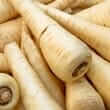
Parsnip (Pastinaca sativa)
Explore the available health information, treatment context, and integrative evidence for Parsnip (Pastinaca sativa).
Evidence Ledger
Grades describe the evidence for Parsnip (Pastinaca sativa) relative to each listed condition or goal.