
- Mustard plants come from several plant species (genera Brassica and Sinapis). The most common types of mustard are Sinapis alba (also called Brassica alba, yellow mustard, or white mustard) and Brassica juncea (also called brown mustard or Indian mustard). Black mustard (Brassica nigra) fell out of use in commercial mustard products in the 1950s.
- Mustard has a long history of use. Traditionally, mustard or mustard oil have been used as a treatment for stomach and intestinal disorders and diabetes, as a natural antibacterial agent, to stimulate vomiting, and as a massage oil to improve blood circulation, muscular development, and skin texture. Mustard plaster (a mixture of flour and mustard powder) has been traditionally applied to the chest and abdomen to promote healing. Today, the primary use of mustard is as a condiment.
- The pungency of mustard comes from its isothiocyanate compounds. Mustard oil is a pungent plant extract from mustard seed, horseradish, and wasabi, and its main constituent is allyl isothiocyanate. Although it is used in India and elsewhere as a cooking oil, high doses injected or applied topically can cause irritation and inflammation.
- There is limited human evidence in support of the use of mustard plaster for bronchitis or for the use of mustard oil in prevention of heart attack. Evidence is conflicting as to whether mustard oil is effective at lowering cholesterol levels or as to its beneficial effects as a massage agent in infants. At this time, high-quality human trials in support of the use of mustard or mustard oil for any indication are limited. Better-designed clinical trials are needed before recommendations can be made regarding taking mustard for any condition.
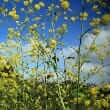
Ingredients
Mustard (Brassica alba, Brassica juncea, Brassica nigra)
Explore the available health information, treatment context, and integrative evidence for Mustard (Brassica alba, Brassica juncea, Brassica nigra).
Evidence Ledger
Grades describe the evidence for Mustard (Brassica alba, Brassica juncea, Brassica nigra) relative to each listed condition or goal.
Background
References
- Agarwal KN, Gupta A, Pushkarna R, et al. Effects of massage & use of oil on growth, blood flow & sleep pattern in infants. Indian J Med Res 2000;112:212-217.
View Abstract - Ansari MA and Razdan RK. Relative efficacy of various oils in repelling mosquitoes. Indian J Malariol 1995;32(3):104-111.
View Abstract - Darmstadt GL, Mao-Qiang M, Chi E, et al. Impact of topical oils on the skin barrier: possible implications for neonatal health in developing countries. Acta Paediatr 2002;91(5):546-554.
View Abstract - Huo, G. R., Ma, L. Q., and Huang, C. H. [Clinical study on treatment of chronic bronchitis by tracheitis plaster]. Zhongguo Zhong.Xi.Yi.Jie.He.Za Zhi. 2001;21(11):816-818.
View Abstract - Jorro G, Morales C, Braso JV, et al. Mustard allergy: three cases of systemic reaction to ingestion of mustard sauce. J Investig.Allergol.Clin.Immunol 1995;5(1):54-56.
View Abstract - Kim MG and Lee HS. Growth-inhibiting activities of phenethyl isothiocyanate and its derivatives against intestinal bacteria. J Food Sci 2009;74(8):M467-M471.
View Abstract - Kohl PK and Frosch PJ. Irritant contact dermatitis induced by a mustard compress. Contact Dermatitis 1990;23(3):189-190.
View Abstract - Lippe IT, Stabentheiner A, and Holzer P. Role of nitric oxide in the vasodilator but not exudative component of mustard oil-induced inflammation in rat skin. Agents Actions 1993;38 Spec No:C22-C24.
View Abstract - Mullany LC, Darmstadt GL, Khatry SK, et al. Traditional massage of newborns in Nepal: implications for trials of improved practice. J Trop.Pediatr 2005;51(2):82-86.
View Abstract - Potter MJ, Bulstrode N, and Cussons P. A skin burn from culinary mustard. Burns 2003;29(5):495-496.
View Abstract - Shankar SR, Yadav RK, Ray RB, et al. Serum lipid response to introducing ghee as a partial replacement for mustard oil in the diet of healthy young Indians. Indian J Physiol Pharmacol 2005;49(1):49-56.
View Abstract - Shankar SR, Bijlani RL, Baveja T, et al. Effect of partial replacement of visible fat by ghee (clarified butter) on serum lipid profile. Indian J Physiol Pharmacol 2002;46(3):355-360.
View Abstract - Singh RB, Niaz MA, Sharma JP, et al. Randomized, double-blind, placebo-controlled trial of fish oil and mustard oil in patients with suspected acute myocardial infarction: the Indian experiment of infarct survival--4. Cardiovasc.Drugs Ther 1997;11(3):485-491.
View Abstract - Singh RB, Dubnov G, Niaz MA, et al. Effect of an Indo-Mediterranean diet on progression of coronary artery disease in high risk patients (Indo-Mediterranean Diet Heart Study): a randomised single-blind trial. Lancet 11-9-2002;360(9344):1455-1461.
View Abstract - Yadav SP, Vats V, Ammini AC, et al. Brassica juncea (Rai) significantly prevented the development of insulin resistance in rats fed fructose-enriched diet. J Ethnopharmacol 2004;93(1):113-116.
View Abstract