
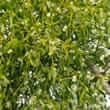
- Once considered a sacred herb in Celtic tradition, mistletoe has been used for centuries for conditions as diverse as high blood pressure, epilepsy, exhaustion, anxiety, arthritis, vertigo (dizziness), and degenerative inflammation of the joints.
- Beginning in the early 20th Century, mistletoe came into practice in Europe as an anti-cancer therapy and this remains a source of great popular interest. For example, in Norway, mistletoe has been considered a "non-proven therapy" or NPT but has been used as a popular method for healing.
- In the last 50 years, many laboratory, animal, and human studies have been conducted on potential anti-cancer effects thought to be caused by immuno-stimulatory effects of mistletoe.
- The most promising potential use is as a cancer therapy, but there is still insufficient clinical evidence to consider it a proven cancer therapy. Toxic effects seem to be rare, but have been reported. The National Cancer Institute monograph "Mistletoe Extracts" provides a complementary and alternative medicine (CAM) information summary and overview of the use of mistletoe as a treatment for cancer, indicating that: [a] in animal studies mixed results have been obtained using mistletoe extracts for slowing tumor growth; [b] well designed clinical trials using mistletoe or its components have not been sufficient to prove efficacy in the treatment of human cancer(s); [c] mistletoe plants and berries are toxic to humans and their extracts are not sold in the United States.
- Mistletoe is not commercially available in the United States, but two U.S. investigators currently have Investigational New Drug approval (IND) from the U.S. Food and Drug Administration (FDA) to study mistletoe.
- The German Commission E Monographs list mistletoe as a treatment for degenerative inflammation of the joints and as palliative therapy for malignant tumors.
- Two major types of mistletoe, European and American, contain very similar proteins and are reputed to have different uses. European mistletoe is believed to reduce blood pressure and act as an antispasmodic and calmative agent, while American mistletoe is believed to simulate smooth muscles, increase blood pressure, and trigger uterine and intestinal contractions. However, there is little research to substantiate any of these claims.
Ingredients
Mistletoe (Viscum album L.)
Explore the available health information, treatment context, and integrative evidence for Mistletoe (Viscum album L.).
Evidence Ledger
Grades describe the evidence for Mistletoe (Viscum album L.) relative to each listed condition or goal.
Background
References
- Bar-Sela G, Gershony A, Haim N. Mistletoe (Viscum album) preparations: an optional drug for cancer patients? Harefuah 2006 Jan;145(1):42-6, 77.
View Abstract - Beuth J, Schneider B, Schierholz JM. Impact of complementary treatment of breast cancer patients with standardized mistletoe extract during aftercare: a controlled multicenter comparative epidemiological cohort study. Anticancer Res. 2008 Jan-Feb;28(1B):523-7.
View Abstract - Bock PR, Friedel WE, Hanisch J, et al. [Efficacy and safety of long-term complementary treatment with standardized European mistletoe extract (Viscum album L.) in addition to the conventional adjuvant oncologic therapy in patients with primary non-metastasized mammary carcinoma. Results of a multi-center, comparative, epidemiological cohort study in Germany and Switzerland]. Arzneimittelforschung 2004;54(8):456-466.
View Abstract - Elsasser-Beile U, Leiber C, et al. Adjuvant intravesical treatment with a standardized mistletoe extract to prevent recurrence of superficial urinary bladder cancer. Anticancer Res 2005 Nov-Dec;25(6C):4733-6.
View Abstract - Finall AI, McIntosh SA, Thompson WD. Subcutaneous inflammation mimicking metastatic malignancy induced by injection of mistletoe extract. BMJ 2006 Dec 23;333(7582):1293-4.
View Abstract - Grossarth-Maticek R, Ziegler R. Randomized and non-randomized prospective controlled cohort studies in matched pair design for the long-term therapy of corpus uteri cancer patients with a mistletoe preparation (Iscador). Eur J Med Res. 2008 Mar 31;13(3):107-20.
View Abstract - Grossarth-Maticek R, Ziegler R. Prospective controlled cohort studies on long-term therapy of cervical cancer patients with a mistletoe preparation (Iscador). Forsch Komplement Med 2007 Jun;14(3):140-7.
View Abstract - Horneber MA, Bueschel G, Huber R, et al. Mistletoe therapy in oncology. Cochrane Database Syst Rev. 2008 Apr 16;(2):CD003297.
View Abstract - Huber R, Classen K, Werner M, et al. In vitro immunoreactivity towards lectin-rich or viscotoxin-rich mistletoe (Viscum album L.) extracts Iscador applied to healthy individuals. Arzneimittelforschung 2006 Jun;56(6A):447-56.
View Abstract - Huber R, Rostock M, Goedl R, et al. Immunologic effects of mistletoe lectins: a placebo-controlled study in healthy subjects. J Soc Integr Oncol 2006 Winter;4(1):3-7.
View Abstract - Kirsch A. Successful treatment of metastatic malignant melanoma with Viscum album extract (Iscador M). J Altern Complement Med 2007 May;13(4):443-5.
View Abstract - Laengler A, Spix C, Seifert G, Gottschling S, Graf N, et al. Complementary and alternative treatment methods in children with cancer: A population-based retrospective survey on the prevalence of use in Germany. Eur J Cancer. 2008 Oct;44(15):2233-40.
View Abstract - Schink M, Troger W, Dabidian A, et al. Mistletoe extract reduces the surgical suppression of natural killer cell activity in cancer patients. a randomized phase III trial. Forsch Komplement Med (2006). 2007 Feb;14(1):9-17.
View Abstract - Seifert G, Tautz C, Seeger K, et al. Therapeutic use of mistletoe for CD30+ cutaneous lymphoproliferative disorder/lymphomatoid papulosis. J Eur Acad Dermatol Venereol. 2007 Apr;21(4):558-60.
View Abstract - Semiglazov VF, Stepula VV, Dudov A, et al. Quality of life is improved in breast cancer patients by Standardised Mistletoe Extract PS76A2 during chemotherapy and follow-up: a randomised, placebo-controlled, double-blind, multicentre clinical trial. Anticancer Res 2006 Mar-Apr;26(2B):1519-29.
View Abstract