
- Meadowsweet (Filipendula ulmaria) is native to Europe and is found as an introduced plant in the northeastern region of the United States. Meadowsweet has historically been used in traditional medicine to treat symptoms of the common cold, stomach complaints, and inflammatory conditions. Herbalists recommend meadowsweet as one of the best digestive herbs for the treatment of ulcers and heartburn. Further research on the uses of meadowsweet is needed.
- Two prominent constituents of meadowsweet that are theoretically responsible for much of its pharmacological activity are salicylates and a plant heparin. Meadowsweet also contains high concentrations of phenolics, theoretically responsible for some of its antibacterial activity.
- Although meadowsweet shares chemistry, history, and proposed uses with the drug aspirin, its efficacy and place in pharmacotherapy compared to aspirin have not been evaluated in well-designed clinical studies.
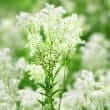
Ingredients
Meadowsweet (Filipendula ulmaria)
Explore the available health information, treatment context, and integrative evidence for Meadowsweet (Filipendula ulmaria).
Evidence Ledger
Grades describe the evidence for Meadowsweet (Filipendula ulmaria) relative to each listed condition or goal.
Background
References
- Abebe W. Herbal medication: potential for adverse interactions with analgesic drugs. J Clin Pharm Ther. 2002;27(6):391-401.
View Abstract - Calliste CA, Trouillas P, Allais DP, et al. Free radical scavenging activities measured by electron spin resonance spectroscopy and B16 cell antiproliferative behaviors of seven plants. J Agric.Food Chem 2001;49(7):3321-3327.
View Abstract - Candy JM, Morrison C, Paton RD, et al. Salicylate toxicity masquerading as malignant hyperthermia. Paediatr.Anaesth. 1998;8(5):421-423.
View Abstract - Downs C, Phillips J, Ranger A, et al. A hemlock water dropwort curry: a case of multiple poisoning. Emerg.Med.J. 2002;19(5):472-473.
View Abstract - Fritioff A, Greger M. Aquatic and terrestrial plant species with potential to remove heavy metals from storm-water. Int J Phytoremediation. 2003;5(3):211-224.
View Abstract - Hamad AM, Sutcliffe AM, Knox AJ. Aspirin-induced asthma: clinical aspects, pathogenesis and management. Drugs 2004;64(21):2417-2432.
View Abstract - Heck AM, DeWitt BA, Lukes AL. Potential interactions between alternative therapies and warfarin. Am J Health Syst.Pharm 7-1-2000;57(13):1221-1227.
View Abstract - Kahkonen MP, Hopia AI, Vuorela HJ, et al. Antioxidant activity of plant extracts containing phenolic compounds. J Agric.Food Chem 1999;47(10):3954-3962.
View Abstract - Liapina LA, Koval'chuk GA. [A comparative study of the action on the hemostatic system of extracts from the flowers and seeds of the meadowsweet (Filipendula ulmaria (L.) Maxim.)]. Izv.Akad.Nauk Ser Biol. 1993;(4):625-628.
View Abstract - Rauha JP, Remes S, Heinonen M, et al. Antimicrobial effects of Finnish plant extracts containing flavonoids and other phenolic compounds. Int J Food Microbiol. 5-25-2000;56(1):3-12.
View Abstract - Rohner Machler M, Glaus TM, Reusch CE. [Life threatening intestinal bleeding in a Bearded Collie associated with a food supplement for horses]. Schweiz.Arch Tierheilkd. 2004;146(10):479-482.
View Abstract - Ryzhikov MA, Ryzhikova VO. [Application of chemiluminescent methods for analysis of the antioxidant activity of herbal extracts]. Vopr.Pitan. 2006;75(2):22-26.
View Abstract - Spiridonov NA, Konovalov DA, Arkhipov VV. Cytotoxicity of some Russian ethnomedicinal plants and plant compounds. Phytother Res 2005;19(5):428-432.
View Abstract - Sroka Z, Cisowski W, Seredynska M, et al. Phenolic extracts from meadowsweet and hawthorn flowers have antioxidative properties. Z.Naturforsch.[C.] 2001;56(9-10):739-744.
View Abstract - Stenberg JA, Witzell J, Ericson L. Tall herb herbivory resistance reflects historic exposure to leaf beetles in a boreal archipelago age-gradient. Oecologia. 2006;148(3):414-25.
View Abstract