- Maggot therapy uses live maggots for cleaning wounds that show little or no improvement after four weeks or wounds that do not heal in eight weeks. These types of wounds have a high risk of infection. Phaenicia sericata and Lucilia sericata are species used in maggot therapy.
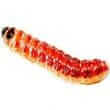
- Maggots are fly larvae (the earliest stage of an insect), just as caterpillars are butterfly or moth larvae.
- Maggot therapy is approved by the U.S. Food and Drug Administration (FDA) for its use in diabetic ulcers (open skin wounds) and wounds after surgery. Maggots are usually placed on the wound with a specific dressing (covering) in order to prevent the maggots from escaping.
- Maggots have been used to promote wound healing, prevent wound infection, delay wound healing, and prevent bone destruction and other effects due to bacterial bone infection during surgery. They have been used to treat abscesses (collections of pus), bone diseases, burns, gangrene (tissue death), and skin diseases. Maggot therapy has also been studied in other conditions as well. Further studies are needed.

← Back to Monographs
 Ingredients
Maggottherapy
Contents
- Lewis R, Whiting P, ter Riet G, et al. A rapid and systematic review of the clinical effectiveness and cost-effectiveness of debriding agents in treating surgical wounds healing by secondary intention. Health Technol.Assess. 2001;5(14):1-131. View Abstract
- Horn KL, Cobb AH Jr, Gates GA. Maggot therapy for subacute mastoiditis. Arch.Otolaryngol. 1976;102(6):377-379. View Abstract
- Mumcuoglu KY, Lipo M, Ioffe-Uspensky I, et al. [Maggot therapy for gangrene and osteomyelitis]. Harefuah 3-2-1997;132(5):323-5, 382. View Abstract
- Namias N, Varela JE, Varas RP, et al. Biodebridement: a case report of maggot therapy for limb salvage after fourth-degree burns. J.Burn Care Rehabil. 2000;21(3):254-257. View Abstract
- Wayman J, Nirojogi V, Walker A, et al. The cost effectiveness of larval therapy in venous ulcers. J.Tissue Viability. 2000;10(3):91-94. View Abstract
- Eneroth M and van Houtum WH. The value of debridement and Vacuum-Assisted Closure (V.A.C.) Therapy in diabetic foot ulcers. Diabetes Metab Res.Rev. 2008;24 Suppl 1:S76-S80. View Abstract
- Nordstrom A, Hansson C, Karlstrom L. Larval therapy as a palliative treatment for severe arteriosclerotic gangrene on the feet. Clin.Exp.Dermatol. 2009;34(8):e683-e685. View Abstract
- Dumville JC, Worthy G, Bland JM, et al. Larval therapy for leg ulcers (VenUS II): randomised controlled trial. BMJ 2009;338:b773. View Abstract
- Arrivillaga J, Rodriguez J, Oviedo M. [Preliminary evaluation of maggot (Diptera: Calliphoridae) therapy as a potential treatment for leishmaniasis ulcers]. Biomedica. 2008;28(2):305-310. View Abstract
- Sherman RA, Wyle F, Vulpe M. Maggot therapy for treating pressure ulcers in spinal cord injury patients. J.Spinal Cord.Med. 1995;18(2):71-74. View Abstract
- Picazo M, Bover J, de la Fuente J, et al. [Sterile maggots as adjuvant procedure for local treatment in a patient with proximal calciphylaxis]. Nefrologia. 2005;25(5):559-562. View Abstract
- Gericke A. and Pitz S. Maggot therapy for periocular skin graft failure in the immunocompromised patient. Br.J.Ophthalmol. 2008;92(6):860-861. View Abstract
- Steenvoorde P, van Doorn LP, Jacobi CE, et al. Maggot debridement therapy in the palliative setting. Am.J.Hosp.Palliat.Care 2007;24(4):308-310. View Abstract
- Steenvoorde P, Jacobi CE, Van Doorn L, et al. Maggot debridement therapy of infected ulcers: patient and wound factors influencing outcome - a study on 101 patients with 117 wounds. Ann.R.Coll.Surg.Engl. 2007;89(6):596-602. View Abstract
- Hall S. A review of maggot debridement therapy to treat chronic wounds. Br.J.Nurs. 8-12-2010;19(15):S26, S28-S26, S31. View Abstract