- Light therapy, also known as phototherapy, involves exposing skin to different wavelengths of light. Light therapy may be performed using lasers, light-emitting diodes (LEDs), fluorescent lamps, dichroic lamps, or very bright full-spectrum light. Treatments are performed regularly for a certain amount of time, under the supervision of healthcare professionals. Light therapy treatments may be given to the whole body or to smaller areas.
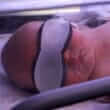
- Light therapy is a first-line treatment for jaundice in newborns (yellowing of skin in babies), severe plaque psoriasis (flaky, itchy skin disease), and seasonal affective disorder (SAD). It is also used for many skin conditions including atopic dermatitis (itchy skin disorder), acne, morphea (hardened skin patches), vitiligo (loss of color in skin), urticaria (hives), and pruritus (itchy skin). Treatment with light has been extended to other conditions, including nonseasonal mood disorders, memory loss, circadian-related sleep disorders, and eating disorders.
- Side effects of phototherapy are generally mild and short-term and include nausea, headache, and skin irritation. Like natural sunlight, long-term exposure to ultraviolet light may cause skin damage, skin cancer, or eye damage. Caution is needed in people who have a history of skin cancer or eye disease or are using agents that may increase their sensitivity to light.
- In general, studies on the use of light therapy have been small and poorly reported. More high-quality research is needed.

← Back to Monographs
 Ingredients
Lighttherapy
Contents
- Braun, D. L., Sunday, S. R., Fornari, V. M., and Halmi, K. A. Bright light therapy decreases winter binge frequency in women with bulimia nervosa: a double-blind, placebo-controlled study. Compr.Psychiatry 1999;40(6):442-448. View Abstract
- Chawla, D. and Parmar, V. Phenobarbitone for prevention and treatment of unconjugated hyperbilirubinemia in preterm neonates: a systematic review and meta-analysis. Indian Pediatr. 2010;47(5):401-407. View Abstract
- De, Mozzi P., Johnston, G. A., and Alexandroff, A. B. Psoriasis: an evidence-based update. Report of the 9th evidenced based update meeting, 12 May 2011, Loughborough, UK. Br.J.Dermatol. 2012;166(2):252-260. View Abstract
- Fulop, A. M., Dhimmer, S., Deluca, J. R., Johanson, D. D., Lenz, R. V., Patel, K. B., Douris, P. C., and Enwemeka, C. S. A meta-analysis of the efficacy of phototherapy in tissue repair. Photomed.Laser Surg. 2009;27(5):695-702. View Abstract
- Koek, M. B., Buskens, E., Bruijnzeel-Koomen, C. A., and Sigurdsson, V. Home ultraviolet B phototherapy for psoriasis: discrepancy between literature, guidelines, general opinions and actual use. Results of a literature review, a web search, and a questionnaire among dermatologists. Br.J.Dermatol. 2006;154(4):701-711. View Abstract
- Kumar, P., Chawla, D., and Deorari, A. Light-emitting diode phototherapy for unconjugated hyperbilirubinaemia in neonates. Cochrane.Database.Syst.Rev. 2011;(12):CD007969. View Abstract
- Lam, R. W., Levitt, A. J., Levitan, R. D., Enns, M. W., Morehouse, R., Michalak, E. E., and Tam, E. M. The Can-SAD study: a randomized controlled trial of the effectiveness of light therapy and fluoxetine in patients with winter seasonal affective disorder. Am.J.Psychiatry 2006;163(5):805-812. View Abstract
- Menter, A., Korman, N. J., Elmets, C. A., Feldman, S. R., Gelfand, J. M., Gordon, K. B., Gottlieb, A., Koo, J. Y., Lebwohl, M., Lim, H. W., Van Voorhees, A. S., Beutner, K. R., and Bhushan, R. Guidelines of care for the management of psoriasis and psoriatic arthritis: Section 5. Guidelines of care for the treatment of psoriasis with phototherapy and photochemotherapy. J.Am.Acad.Dermatol. 2010;62(1):114-135. View Abstract
- Middelkamp-Hup, M. A., Bos, J. D., Rius-Diaz, F., Gonzalez, S., and Westerhof, W. Treatment of vitiligo vulgaris with narrow-band UVB and oral Polypodium leucotomos extract: a randomized double-blind placebo-controlled study. J.Eur.Acad.Dermatol.Venereol. 2007;21(7):942-950. View Abstract
- Morgan, M. C. and Rashid, R. M. The effect of phototherapy on neutrophils. Int.Immunopharmacol. 2009;9(4):383-388. View Abstract
- Partonen, T., Leppamaki, S., Hurme, J., and Lonnqvist, J. Randomized trial of physical exercise alone or combined with bright light on mood and health-related quality of life. Psychol.Med. 1998;28(6):1359-1364. View Abstract
- Robinson, A., Kardos, M., and Kimball, A. B. Physician Global Assessment (PGA) and Psoriasis Area and Severity Index (PASI): why do both? A systematic analysis of randomized controlled trials of biologic agents for moderate to severe plaque psoriasis. J.Am.Acad.Dermatol. 2012;66(3):369-375. View Abstract
- Stern, R. S. The risk of squamous cell and basal cell cancer associated with psoralen and ultraviolet A therapy: a 30-year prospective study. J.Am.Acad.Dermatol. 2012;66(4):553-562. View Abstract
- Tuunainen, A., Kripke, D. F., and Endo, T. Light therapy for non-seasonal depression. Cochrane.Database.Syst.Rev. 2004;(2):CD004050. View Abstract
- Tzung, T. Y., Wu, K. H., and Huang, M. L. Blue light phototherapy in the treatment of acne. Photodermatol.Photoimmunol.Photomed. 2004;20(5):266-269. View Abstract