
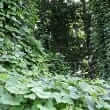
- Kudzu originated in China and was brought to the United States from Japan in the late 1800s. It is distributed throughout much of the eastern United States and is most common in the southern part of the continent.
- Kudzu has traditionally been used in China to treat alcoholism, diabetes (high blood sugar), gastroenteritis (inflamed stomach or intestine), and deafness.
- Evidence suggests kudzu may improve signs and symptoms of unstable angina (chest pain), improve insulin resistance, and have a positive effect on cognitive function in postmenopausal women. However, most studies have suffered from methodological weaknesses and small sample sizes.
- Chinese healers have used kudzu to treat high blood pressure and chest pain and to minimize alcohol cravings. Research indicates that puerarin (a constituent of kudzu) may increase blood flow to the heart and brain which helps explain certain traditional uses.
Ingredients
Kudzu (Pueraria lobata)
Explore the available health information, treatment context, and integrative evidence for Kudzu (Pueraria lobata).
Evidence Ledger
Grades describe the evidence for Kudzu (Pueraria lobata) relative to each listed condition or goal.
Background
References
- Chiang HM, Fang SH, Wen KC, et al. Life-threatening interaction between the root extract of Pueraria lobata and methotrexate in rats. Toxicol Appl Pharmacol 2005;209(3):263-268.
View Abstract - Jeon GC, Park MS, Yoon DY, et al. Antitumor activity of spinasterol isolated from Pueraria roots. Exp Mol Med 2005;37(2):111-120.
View Abstract - Jiang RW, Lau KM, Lam HM, et al. A comparative study on aqueous root extracts of Pueraria thomsonii and Pueraria lobata by antioxidant assay and HPLC fingerprint analysis. J Ethnopharmacol 2005;96(1-2):133-138.
View Abstract - Jin LH, Liu CF, Zeng Y. [Protective effects of puerarin on radiation injury of experimental rats]. Zhong Xi Yi Jie He Xue Bao 2005;3(1):43-45.
View Abstract - Lau CS, Carrier DJ, Beitle RR, et al. A glycoside flavonoid in Kudzu (Pueraria lobata): identification, quantification, and determination of antioxidant activity. Appl Biochem Biotechnol 2005;121-124:783-794.
View Abstract - Lukas SE, Penetar D, Berko J, et al. An extract of the Chinese herbal root kudzu reduces alcohol drinking by heavy drinkers in a naturalistic setting. Alcohol Clin Exp Res 2005;29(5):756-762.
View Abstract - Mercer LD, Kelly BL, Horne MK, et al. Dietary polyphenols protect dopamine neurons from oxidative insults and apoptosis: investigations in primary rat mesencephalic cultures. Biochem Pharmacol 2005;69(2):339-345.
View Abstract - Pan HP, Mo XL, Yang JZ, et al. [Effect of puerarin on the expression of Hsp70 in the rats with cerebral injury induced by acute local ischemia]. Zhongguo Zhong Yao Za Zhi 2005;30(7):538-540.
View Abstract - Shen P, Liu MH, Ng TY, et al. Differential effects of isoflavones, from Astragalus membranaceus and Pueraria thomsonii, on the activation of PPARalpha, PPARgamma, and adipocyte differentiation in vitro. J Nutr 2006;136(4):899-905.
View Abstract - Trisomboon H, Malaivijitnond S, Watanabe G, et al. Ovulation block by Pueraria mirifica: a study of its endocrinological effect in female monkeys. Endocrine 2005;26(1):33-39.
View Abstract - Xiao LZ, Gao LJ, Ma SC. [Comparative study on effects of puerarin and granulocyte colony-stimulating factor in treating acute myocardial infarction]. Zhongguo Zhong Xi Yi Jie He Za Zhi 2005;25(3):210-213.
View Abstract - Xu X, Zhang S, Zhang L, et al. The Neuroprotection of puerarin against cerebral ischemia is associated with the prevention of apoptosis in rats. Planta Med 2005;71(7):585-591.
View Abstract - Zhang S, Ji G, Liu J. Reversal of chemical-induced liver fibrosis in Wistar rats by puerarin. J Nutr Biochem 2005.
View Abstract - Zhang Y, Chen J, Zhang C, et al. Analysis of the estrogenic components in kudzu root by bioassay and high performance liquid chromatography. J Steroid Biochem Mol Biol 2005;94(4):375-381.
View Abstract - Zhao Y, Du GY, Cui HF, et al. [Experimental study of protective effect of pueraria compound on the cerebral ischemic injury]. Zhongguo Zhong Yao Za Zhi 2005;30(7):548-551.
View Abstract