
- Isoflavones were first discovered due to their ability to disrupt the action of estrogen in animals. As a result, they are classified as a type of phytoestrogen, which, as the name suggests, is a naturally occurring plant ("phyto") chemical with estrogen-like properties.
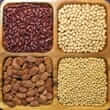
- In the diet, isoflavones may be found in soybeans; soy-based foods, including soy milk, flour, nuts, tempeh, and tofu; and legumes, such as peas, peanuts, chick peas, and navy beans. Although in the traditional Asian soybean, Glycine soja, isoflavone levels are typically very low, levels are much higher in the Glycine max bean variety due to its mass production over the past 60 years and its increased need for protection from pests. Apart from food sources, isoflavones may also be purchased in purified form, often isolated and extracted from soy or red clover. In supplements, soy isoflavones are normally found as isoflavone glycosides (genistin, daidzin, glycitin).
- Unlike in Western cultures, where the intake of soy-based foods is typically low, dietary intake of isoflavones is generally higher in certain Asian populations, where soy-based foods are more commonly eaten. Over the past decade, however, Western soy consumption has increased due to the growing popularity of soy-based foods and the increased attention to their proposed health benefits. Currently, infant soy formulas account for more than 25% of all infant formulas sold. As of 1999, the U.S. Food and Drug Administration (FDA) permits soy protein products (a source of isoflavones) to display a health claim for a reduced risk of heart disease.
- Therapeutically, isoflavones are commonly used in the West to reduce menopausal symptoms such as hot flashes, to lower cardiovascular disease risk factors, and to prevent osteoporosis. Isoflavones have also been implicated for the treatment of high cholesterol, diabetes, vaginal dryness, various types of cancer, and postmenopausal mood and cognition. However, results generally differ between studies, and firm conclusions are difficult to make. Additional research in these areas is needed.
Ingredients
Isoflavones
Explore the available health information, treatment context, and integrative evidence for Isoflavones.
Evidence Ledger
Grades describe the evidence for Isoflavones relative to each listed condition or goal.
Background
References
- Adams KF, Lampe PD, Newton KM, et al. Soy protein containing isoflavones does not decrease colorectal epithelial cell proliferation in a randomized controlled trial. Am J Clin Nutr 2005;82(3):620-626. View Abstract
- Atkinson C, Compston JE, Day NE, et al. The effects of phytoestrogen isoflavones on bone density in women: a double-blind, randomized, placebo-controlled trial. Am J Clin Nutr 2004;79(2):326-333. View Abstract
- Atkinson C, Warren RM, Sala E, et al. Red-clover-derived isoflavones and mammographic breast density: a double-blind, randomized, placebo-controlled trial [ISRCTN42940165]. Breast Cancer Res 2004;6(3):R170-R179. View Abstract
- Coon JT, Pittler MH, Ernst E. Trifolium pratense isoflavones in the treatment of menopausal hot flushes: a systematic review and meta-analysis. Phytomedicine 2007;14(2-3):153-159. View Abstract
- Crisafulli A, Marini H, Bitto A, et al. Effects of genistein on hot flushes in early postmenopausal women: a randomized, double-blind EPT- and placebo-controlled study. Menopause 2004;11(4):400-404. View Abstract
- Hidalgo LA, Chedraui PA, Morocho N, et al. The effect of red clover isoflavones on menopausal symptoms, lipids and vaginal cytology in menopausal women: a randomized, double-blind, placebo-controlled study. Gynecol Endocrinol 2005;21(5):257-264. View Abstract
- Howes JB, Tran D, Brillante D, et al. Effects of dietary supplementation with isoflavones from red clover on ambulatory blood pressure and endothelial function in postmenopausal type 2 diabetes. Diabetes Obes Metab 2003;5(5):325-332. View Abstract
- Lee YB, Lee HJ, Sohn HS. Soy isoflavones and cognitive function. J Nutr Biochem 2005;16(11):641-649. View Abstract
- Lenn J, Uhl T, Mattacola C, et al. The effects of fish oil and isoflavones on delayed onset muscle soreness. Med Sci Sports Exerc 2002;34(10):1605-1613. View Abstract
- Maskarinec G, Morimoto Y, Hebshi S, et al. Serum prostate-specific antigen but not testosterone levels decrease in a randomized soy intervention among men. Eur J Clin Nutr 2006;60(12):1423-1429. View Abstract
- Messina M, Bennink M. Soyfoods, isoflavones and risk of colonic cancer: a review of the in vitro and in vivo data. Baillieres Clin Endocrinol Metab 1998;12(4):707-728. View Abstract
- Messina M, Ho S, Alekel DL. Skeletal benefits of soy isoflavones: a review of the clinical trial and epidemiologic data. Curr Opin Clin Nutr Metab Care 2004;7(6):649-658. View Abstract
- Teede HJ, Giannopoulos D, Dalais FS, et al. Randomised, controlled, cross-over trial of soy protein with isoflavones on blood pressure and arterial function in hypertensive subjects. J Am Coll Nutr 2006;25(6):533-540. View Abstract
- Wu J, Oka J, Tabata I, et al. Effects of isoflavone and exercise on BMD and fat mass in postmenopausal Japanese women: a 1-year randomized placebo-controlled trial. J Bone Miner Res 2006;21(5):780-789. View Abstract
- Zhuo XG, Melby MK, Watanabe S. Soy isoflavone intake lowers serum LDL cholesterol: a meta-analysis of 8 randomized controlled trials in humans. J Nutr 2004;134(9):2395-2400. View Abstract