
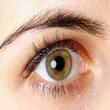
- Iridology is the study of the iris (colored part of the eye) with the intention of gaining information about underlying diseases. Naturopaths and other practitioners may use this technique.
- Iridology is based on the belief that each body region and organ is represented at one specific location in the iris. Abnormalities in a region are suggested to correspond to abnormalities in the respective organ. This technique was developed in Budapest, Hungary in the 1800s by the physician Ignatz von Pezcely. Iridology was later adapted by Bernard Jensen, an American chiropractor. Jensen based his practice on detailed diagrams of the left and right irises, assigning every organ, many body parts, and several bodily functions to a specific location on one or both irises.
- The popularity of iridology grew in the 1900s. Iridologists visually access the iris of their patients by direct examination or by studying close-up photographs. Some iridologists use sclerology, a technique that studies lines on the sclera (the white part of the eye), which they believe can show changes in health patterns and conditions. The Rayid model may also be used, which studies eye patterns with the aim to evaluate mental, emotional, spiritual, and physical balance.
Therapies
Iridology
Explore the available health information, treatment context, and integrative evidence for Iridology.
Evidence Ledger
Grades describe the evidence for Iridology relative to each listed condition or goal.
Background
References
- Bartholomew RE, Likely M. Subsidising Australian pseudoscience: is iridology complementary medicine or witch doctoring? Aust N Z J Public Health 1998;22(1):163-164.
- Berggren L. Iridology. A critical review. Acta Ophthalmol 1985;63(1):1-8.
- Buchanan TJ, Sutherland CJ, Strettle RJ, et al. An investigation of the relationship between anatomical features in the iris and systemic disease with reference to iridology. Complement Ther Med 1996;4:98-102.
- Caradonna B. Western medicine looks at iridology again. Iridol Rev J 1990;2(2):13-14.
- Caradonna B. Iridology research part 1-design. Iridol Rev J 1994;2(3):3-5.
- Cockburn D. A study of the validity of iris diagnosis. Austral J Optom 1981;64(4):154-157.
- Davidson F. How iridology and orthodox medicine work together. J Altern Med 1985;3(11):17-18.
- Ernst E. Iridology: not useful and potentially harmful. Arch Ophthalmol 2000;118(1):120-121.
- Friedman GD, Selby JV, Quesenberry CP, et al. Eye color and hypertension. Med Hypoth 1990;33(3):201-206.
- Kleinstein RN, Seitz MR, Barton TE, et al. Iris color and hearing loss. Am J Optom Physiol Opt 1984;61(3):145-149.
- Knipschild P. Looking for gall bladder disease in the patient's iris. BMJ 1988;297(6663):1578-1581.
View Abstract - Popescu MP, Waniek DA. [Improved irido-diagnostic method: possibilities of computerized iridology]. Rev Chir Oncol Radiol 1986;30(1):29-33.
- Simon A, Worthen DM, Mitas JA. An evaluation of iridology. JAMA 1979;242(13):1385-1389.
View Abstract - Worrall RS. Pseudoscience--a critical look at iridology. J Am Optom Assoc 1984;55(10):735-739.
View Abstract - Yoo CS, Hwang WJ, Hong SH, et al. Relationship between iris constitution analysis and TNF-alpha gene polymorphism in hypertensives. Am J Chin Med 2007;35(4):621-629.
View Abstract