
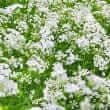
- Hemlock (Conium maculatum) is one of the most poisonous plants, due to the presence of piperidine alkaloids in all parts of the plant, including the leaves, flowers, fruits, seeds, and roots. Hemlock was purportedly the poison used in ancient Greece to execute condemned prisoners.
- Hemlock poisoning affects the central nervous system (CNS), causing CNS stimulation followed by depression. Hemlock intoxication has occurred when this plant or parts of it are mistaken for other wild and cultivated edible plants, including fennel, wild carrot, wild chervil, anise (seeds), parsley (leaves), and parsnip (roots). Toxic reactions may result from inhalation as well as ingestion, due to the volatility of hemlock alkaloids. Drying the plant greatly reduces, but does not eliminate, the toxicity.
Ingredients
Hemlock
Explore the available health information, treatment context, and integrative evidence for Hemlock.
Evidence Ledger
Grades describe the evidence for Hemlock relative to each listed condition or goal.
Background
References
- Attardo, C. and Sartori, F. Pharmacologically active plant metabolites as survival strategy products. Boll Chim Farm 2003;142(2):54-65. View Abstract
- Biberci, E., Altuntas, Y., Cobanoglu, A., et al. Acute respiratory arrest following hemlock (Conium maculatum) intoxication. J.Toxicol.Clin.Toxicol. 2002;40(4):517-518. View Abstract
- Brenet, O., Roy, P. M., Harry, P., et al. [Hemlock poisoning: an occasionally benign course]. Presse Med. 1-20-1996;25(2):82. View Abstract
- Carod-Artal, F. J. [Neurological syndromes linked with the intake of plants and fungi containing a toxic component (I). Neurotoxic syndromes caused by the ingestion of plants, seeds and fruits]. Rev Neurol. 5-1-2003;36(9):860-871. View Abstract
- Daugherty, C. G. The death of Socrates and the toxicology of hemlock. J.Med.Biogr. 1995;3(3):178-182. View Abstract
- Davies, M. L. and Davies, T. A. Hemlock: murder before the Lord. Med Sci Law 1994;34(4):331-333. View Abstract
- Drummer, O. H., Roberts, A. N., Bedford, P. J., et al. Three deaths from hemlock poisoning. Med.J.Aust. 6-5-1995;162(11):592-593. View Abstract
- Foster, P. F., McFadden, R., Trevino, R., et al. Successful transplantation of donor organs from a hemlock poisoning victim. Transplantation 9-15-2003;76(5):874-876. View Abstract
- Frank, B. S., Michelson, W. B., Panter, K. E., et al. Ingestion of poison hemlock (Conium maculatum). West J.Med. 1995;163(6):573-574. View Abstract
- Gibbs, D. Dr John Andree, MD (Rheims) LRCP, founding physician of the London Hospital. J Med Biogr. 2003;11(2):87-94. View Abstract
- MacLaughlin, B. W., Gutsmuths, B., Pretner, E., et al. Effects of homeopathic preparations on human prostate cancer growth in cellular and animal models. Integr.Cancer Ther 2006;5(4):362-372. View Abstract
- Reckeweg, H. H. Materia Medica Momoeopathia Antihomotoxica, Volume I: A Selective Pharmacology. Baden-Baden: Aurelia-Verlag;1996.
- Reynolds, T. Hemlock alkaloids from Socrates to poison aloes. Phytochemistry 2005;66(12):1399-1406. View Abstract
- Thangapazham, R. L., Gaddipati, J. P., Rajeshkumar, N. V., et al. Homeopathic medicines do not alter growth and gene expression in prostate and breast cancer cells in vitro. Integr.Cancer Ther 2006;5(4):356-361. View Abstract
- Vetter, J. Poison hemlock (Conium maculatum L.). Food Chem.Toxicol. 2004;42(9):1373-1382. View Abstract