
- Club moss grows along the ground and reproduces by producing spores, rather than seeds. Lycopodium clavatum has been used in folk medicine to treat bladder and kidney disorders and to increase urine flow. There is insufficient available evidence in humans to support the use of Lycopodium clavatum for any condition.
- According to the U.S. Department of Agriculture (USDA) PLANTS database, numerous species of club moss belong to two separate genera in the Lycopodiaceae family: Lycopodium and Huperzia. There is some overlap between the scientific names for species in both genera. The information in this monograph refers to the species Lycopodium clavatum.
- Club moss species that contain huperzine, a cholinesterase inhibitor (e.g., Huperzine serrata, Lycopodium serrata) have been mistaken for Lycopodium clavatum and ingested, resulting in cholinergic poisoning.
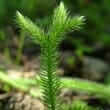
Ingredients
Club moss (Lycopodium clavatum)
Explore the available health information, treatment context, and integrative evidence for Club moss (Lycopodium clavatum).
Evidence Ledger
Grades describe the evidence for Club moss (Lycopodium clavatum) relative to each listed condition or goal.
Background
References
Natural Standard developed the above evidence-based information based on a thorough systematic review of the available scientific articles. For comprehensive information about alternative and complementary therapies on the professional level, go to . Selected references are listed below.
- Andersen TC, Jurgensen GW, Christensen E. Lycopodium spores in transrectal ultrasound-guided core biopsies of the prostate. Scand J Urol Nephrol 1998;32(2):148-149.
View Abstract - Berkefeld K. [A possibility for verifying condom use in sex offenses]. Arch Kriminol 1993;192(1-2):37-42.
View Abstract - Cullinan P, Cannon J, Sheril D, et al. Asthma following occupational exposure to Lycopodium clavatum in condom manufacturers. Thorax 1993;48(7):774-775.
View Abstract - Felgenhauer N, Zilker T, Worek F, et al. Intoxication with huperzine A, a potent anticholinesterase found in the fir club moss. J Toxicol Clin Toxicol 2000;38(7):803-808.
View Abstract - Gebhardt R. Antioxidative, antiproliferative and biochemical effects in HepG2 cells of a homeopathic remedy and its constituent plant tinctures tested separately or in combination. Arzneimittelforschung 2003;53(12):823-830.
View Abstract - Nakamura S, Hirai T, Ueno, J. [Studies on bronchial asthma. 4. On occupational asthma considered to be caused by Lycopodium clavatum]. Arerugi 1969;18(4):258-262.
View Abstract - Orhan I, Kupeli E, Sener B, et al. Appraisal of anti-inflammatory potential of the clubmoss, Lycopodium clavatum L. J Ethnopharmacol 2007;109(1):146-150.
View Abstract - Orhan I, Terzioglu S, Sener B. Alpha-onocerin: an acetylcholinesterase inhibitor from Lycopodium clavatum. Planta Med 2003;69(3):265-267.
View Abstract - Rollinger JM, Ewelt J, Seger C, et al. New insights into the acetylcholinesterase inhibitory activity of Lycopodium clavatum. Planta Med 2005;71(11):1040-1043.
View Abstract