
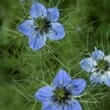
- Black seed (Nigella sativa) is an annual flowering plant, native to southwest Asia, which has been used primarily in candies and liquors, as well as medicinally. In many Arabian, Asian, and African countries, black seed oil is used as a natural remedy for a wide range of diseases.
- Early human study suggests that black seed may decrease allergies. Black seed has also been studied for use in cancer, immune disorders, inflammation, stomach and respiratory conditions, and for women's health.
Ingredients
Black seed (Nigella sativa)
Explore the available health information, treatment context, and integrative evidence for Black seed (Nigella sativa).
Evidence Ledger
Grades describe the evidence for Black seed (Nigella sativa) relative to each listed condition or goal.
Background
References
Natural Standard developed the above evidence-based information based on a thorough systematic review of the available scientific articles. For comprehensive information about alternative and complementary therapies on the professional level, go to . Selected references are listed below
- Ali, BH and Blunden, G. Pharmacological and toxicological properties of Nigella sativa. Phytother Res. 2003;17(4):299-305.
View Abstract - Awad, EM. In vitro decreases of the fibrinolytic potential of cultured human fibrosarcoma cell line, HT1080, by Nigella sativa oil. Phytomedicine. 2005;12(1-2):100-107.
View Abstract - Farah, N, Benghuzzi, H, Tucci, M, et al. The effects of isolated antioxidants from black seed on the cellular metabolism of A549 cells. Biomed Sci Instrum. 2005;41:211-216.
View Abstract - Gali-Muhtasib, H, Roessner, A, and Schneider-Stock, R. Thymoquinone: a promising anti-cancer drug from natural sources. Int J Biochem Cell Biol. 2006;38(8):1249-1253.
View Abstract - Gali-Muhtasib, H, Diab-Assaf, M, Boltze, C, et al. Thymoquinone extracted from black seed triggers apoptotic cell death in human colorectal cancer cells via a p53-dependent mechanism. Int J Oncol. 2004;25(4):857-866.
View Abstract - Islam, SN, Begum, P, Ahsan, T, et al. Immunosuppressive and cytotoxic properties of Nigella sativa. Phytother Res. 2004;18(5):395-398.
View Abstract - Kalus, U, Pruss, A, Bystron, J, et al. Effect of Nigella sativa (black seed) on subjective feeling in patients with allergic diseases. Phytother Res. 2003;17(10):1209-1214.
View Abstract - Morsi, NM. Antimicrobial effect of crude extracts of Nigella sativa on multiple antibiotics-resistant bacteria. Acta Microbiol Pol. 2000;49(1):63-74.
View Abstract - Norwood, AA, Tucci, M, and Benghuzzi, H. A comparison of 5-fluorouracil and natural chemotherapeutic agents, EGCG and thymoquinone, delivered by sustained drug delivery on colon cancer cells. Biomed Sci Instrum. 2007;43:272-277.
View Abstract - Otoom, SA, Al Safi, SA, Kerem, ZK, et al. The use of medicinal herbs by diabetic Jordanian patients. J Herb Pharmacother. 2006;6(2):31-41.
View Abstract - Rooney, S and Ryan, MF. Effects of alpha-hederin and thymoquinone, constituents of Nigella sativa, on human cancer cell lines. Anticancer Res. 2005;25(3B):2199-2204.
View Abstract - Salem, ML. Immunomodulatory and therapeutic properties of the Nigella sativa L. seed. Int Immunopharmacol. 2005;5(13-14):1749-1770.
View Abstract - Steinmann, A, Schatzle, M, Agathos, M, et al. Allergic contact dermatitis from black cumin (Nigella sativa) oil after topical use. Contact Dermatitis 1997;36(5):268-269.
View Abstract - Suboh, SM, Bilto, YY, and Aburjai, TA. Protective effects of selected medicinal plants against protein degradation, lipid peroxidation and deformability loss of oxidatively stressed human erythrocytes. Phytother Res. 2004;18(4):280-284.
View Abstract - Thabrew, MI, Mitry, RR, Morsy, MA, et al. Cytotoxic effects of a decoction of Nigella sativa, Hemidesmus indicus and Smilax glabra on human hepatoma HepG2 cells. Life Sci. 8-5-2005;77(12):1319-1330.
View Abstract