
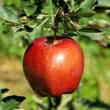
- Apple (Malus domestica) is the name for both the tree and fruit. The word "apple" is thought to come from the Old English word æppel. Experts have suggested that the word "apple" may be one of the oldest Indo-European words in the English language. The scientific name, Malus, is derived from the Latin word for apple and from the archaic Greek mÄlon.
- Apple is one of the most widely cultivated fruits. It can be stored for months and still have nutritious value. Winter apples, which are picked in late autumn and stored at just above freezing, are considered an important food in Europe, Asia, Argentina, and the United States. Apples have always been consumed as a food, but their constituents and potential medicinal uses remain under investigation.
- Apples can be canned, juiced, pureed, baked, stewed, and fermented. They can be used to make juice, cider, applesauce, vinegar, pectin, and baked goods. Dried apples can be mixed with water, alcohol, or other liquids for later use. Apples can also be used to make alcoholic drinks such as applejack, Calvados, and wine.
- Apples are high-fiber, low-calorie fruits that contain vitamin C. They are also rich in antioxidants, which are compounds that may help prevent colon, prostate, and lung cancer. Studies have found that phenolics, a type of antioxidant found in apples, may protect nerve cells from damage and reduce the risk of diseases like Alzheimer's and Parkinson's. However, more research is needed to confirm these findings.
- Apples are considered to be a safe part of the human diet. They are thought to be an effective treatment for diarrhea in children, high blood cholesterol, hair growth, burn wounds, allergies, mercury poisoning, and the side effects of radiation. Some studies suggest that apples may help slow cancer development, manage diabetes, and help patients prepare for surgery.
- Apple contains pectin, a type of fiber that may prevent high cholesterol, colon cancer, high blood pressure, and gallstones. Pectin may also reduce diarrhea, although more evidence is needed to confirm this. Apples also have a compound called quercetin, which is thought to prevent heart attacks, eye diseases, and arthritis. Quercetin may help control asthma, stomach disorders, and chronic heartburn. Other compounds found in apples called phenolic phytochemicals may protect the brain from damage that can lead to Alzheimer's and Parkinson's diseases. However, further research is necessary.
Ingredients
Apple
Explore the available health information, treatment context, and integrative evidence for Apple.
Evidence Ledger
Grades describe the evidence for Apple relative to each listed condition or goal.
Background
References
- Anderson, J. W., Gustafson, N. J., Bryant, C. A., and Tietyen-Clark, J. Dietary fiber and diabetes: a comprehensive review and practical application. J Am Diet Assoc 1987;87(9):1189-1197. View Abstract
- Becker, W. M., Vogel, L., and Vieths, S. Standardization of allergen extracts for immunotherapy: where do we stand? Curr Opin.Allergy Clin Immunol. 2006;6(6):470-475. View Abstract
- Campbell, G., Pickles, T., and D'yachkova, Y. A randomised trial of cranberry versus apple juice in the management of urinary symptoms during external beam radiation therapy for prostate cancer. Clin Oncol.(R.Coll Radiol.) 2003;15(6):322-328. View Abstract
- Davidson, M. H., Dugan, L. D., Stocki, J., Dicklin, M. R., Maki, K. C., Coletta, F., Cotter, R., McLeod, M., and Hoersten, K. A low-viscosity soluble-fiber fruit juice supplement fails to lower cholesterol in hypercholesterolemic men and women. J Nutr 1998;128(11):1927-1932. View Abstract
- Dennison, B. A. Fruit juice consumption by infants and children: a review. J Am Coll Nutr 1996;15(5 Suppl):4S-11S. View Abstract
- Enomoto, T., Nagasako-Akazome, Y., Kanda, T., Ikeda, M., and Dake, Y. Clinical effects of apple polyphenols on persistent allergic rhinitis: A randomized double-blind placebo-controlled parallel arm study. J Investig.Allergol.Clin Immunol. 2006;16(5):283-289. View Abstract
- Fahlstrom, M., Fahlstrom, P. G., Lorentzon, R., and Henriksson-Larsen, K. Positive short-term subjective effect of sports drink supplementation during recovery. J Sports Med Phys Fitness 2006;46(4):578-584. View Abstract
- Gallus, S., Talamini, R., Giacosa, A., Montella, M., Ramazzotti, V., Franceschi, S., Negri, E., and La, Vecchia C. Does an apple a day keep the oncologist away? Ann Oncol. 2005;16(11):1841-1844. View Abstract
- Ko, S. H., Choi, S. W., Ye, S. K., Cho, B. L., Kim, H. S., and Chung, M. H. Comparison of the antioxidant activities of nine different fruits in human plasma. J Med Food 2005;8(1):41-46. View Abstract
- Mahalko, J. R., Sandstead, H. H., Johnson, L. K., Inman, L. F., Milne, D. B., Warner, R. C., and Haunz, E. A. Effect of consuming fiber from corn bran, soy hulls, or apple powder on glucose tolerance and plasma lipids in type II diabetes. Am J Clin Nutr 1984;39(1):25-34. View Abstract
- Parsons, S. R. Effects of high fiber breakfasts on glucose metabolism in noninsulin-dependent diabetics. Am J Clin Nutr 1984;40(1):66-71. View Abstract
- Shah, M., Griffin, I. J., Lifschitz, C. H., and Abrams, S. A. Effect of orange and apple juices on iron absorption in children. Arch Pediatr Adolesc Med 2003;157(12):1232-1236. View Abstract
- Splinter, W. M., Stewart, J. A., and Muir, J. G. The effect of preoperative apple juice on gastric contents, thirst, and hunger in children. Can J Anaesth. 1989;36(1):55-58. View Abstract
- Tanabe, T., Ebina, M., Ishihara, H., Matsuki, A., Oshima, S., and Fukushi, S. [Preanesthetic meals in elective surgical patients]. Masui 1997;46(6):788-792. View Abstract
- Valois, S., Costa-Ribeiro, H., Jr., Mattos, A., Ribeiro, T. C., Mendes, C. M., and Lifshitz, F. Controlled, double-blind, randomized clinical trial to evaluate the impact of fruit juice consumption on the evolution of infants with acute diarrhea. Nutr J 2005;4:23. View Abstract