
Note
: Currently, there is insufficient evidence available on the safety or effectiveness of integrative therapies for the prevention or treatment of anthrax infection. The integrative therapies listed below should be used only under the supervision of a qualified healthcare provider and should not be used in replacement of other proven therapies or preventive measures.
medical conditions
Anthrax infection
Explore the available health information, treatment context, and integrative evidence for Anthrax infection.
Evidence Ledger
Grades describe the evidence for Anthrax infection relative to each listed condition or goal.
Toggle evidence section
Evidence and integrative options for Anthrax infection
Background
- Anthrax infection can occur in the following three forms: cutaneous (skin), inhalation (lungs), and gastrointestinal (digestive). Cutaneous anthrax is associated with a 20% chance of death but is rarely fatal if treated. Gastrointestinal anthrax can usually be treated with antibiotics but is associated with a 25-60% chance of death. Inhalation anthrax is the most difficult form to treat and is usually deadly.
- Spores (cells that are dormant but may become active under the right conditions) can live in the soil for years, and humans may become infected with anthrax by handling products from infected animals or by inhaling anthrax spores from contaminated animal products. Additionally, anthrax can also be spread by eating undercooked meat from infected animals, which does not usually occur in the United States. Anthrax can be found in various parts of the world. However, it is found more frequently in developing countries.
- Individuals may also be exposed to anthrax when anthrax is used as a biological weapon. According to the Centers for Disease Control and Prevention (CDC), anthrax spores were deliberately spread in powder-containing envelopes through the U.S. postal system in 2001.
Risk Factors and Causes
- Anthrax is not contagious and people who have inhaled anthrax do not breathe out spores. Individuals must come in direct contact with anthrax spores in order to become infected.
- Bacillus anthracis
:
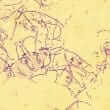
Bacillus anthracis is a bacterium that lives in a spore, and usually affects farm animals rather than humans. The spores can only be seen under a microscope, as they are too small to observe by the naked eye. Additionally, spores do not have a distinctive appearance, smell, or taste. The bacteria may live in the soil for decades, even under the harshest conditions. A grazing animal may ingest spores that begin to grow, spread, and eventually kill the animal. The spores will remain on the dead animal and return to the soil to infect other animals. The length of time that anthrax spores remain on dead animals depends on climate conditions. - Biological weapons:
Widespread panic occurred in 2001 when letters containing anthrax spores were sent through the U.S. postal service to Florida, New York City, and Washington, D.C., resulting in 22 cases of infection. The Centers for Disease Control and Prevention (CDC) classifies anthrax as a Category A agent, meaning it poses the greatest possible threat against public health.
Signs and Symptoms
- General:
Symptoms usually occur within seven days of becoming infected with anthrax and include: fever (temperature greater than 100°F), flu like symptoms, cough, chest discomfort, shortness of breath, fatigue, muscle aches, sore throat, enlarged lymph nodes (located in clusters in the neck, armpits, and groin), headache, nausea, loss of appetite, abdominal distress, nausea, vomiting, and diarrhea. Many illnesses begin with flu-like symptoms. However, runny nose is usually a symptom of the flu and the common cold and not characteristic of anthrax. Individuals who are exposed to anthrax may take antibiotics to prevent infection from occurring. - Cutaneous anthrax:
Symptoms of cutaneous anthrax will usually begin within one day.
Skin infection begins as a raised itchy bump that resembles an insect bite. In approximately one to two days, the bump develops into a vesicle (small fluid-filled blister) and then a painless ulcer. The length of the ulcer is usually 1-3 cm in diameter and appears to be black and necrotic (indicating dead tissue) in the center. - Gastrointestinal anthrax:
Initial symptoms of gastrointestinal anthrax include nausea, loss of appetite, and vomiting. Later symptoms include severe stomach pain, hematemesis (vomiting blood), and bloody diarrhea. - Inhalation anthrax: Early symptoms of inhalation anthrax may resemble a common cold. Several days later, patients may experience severe breathing problems, chest discomfort, tiredness, and muscle aches.
Diagnosis
- Blood tests:
The doctor may take a blood sample from the vein to determine whether anthrax bacteria are present. It will usually take between six and 24 hours for the test results to be completed. - Chest X-ray or computerized tomography (CT) scan: A chest x-ray or CT scan may help diagnose inhalation anthrax since the lungs are affected.
- Endoscopy and stool samples:
The doctor may examine the throat or intestines with an endoscope (a thin, flexible tube with a video camera) to diagnose gastrointestinal (digestive) anthrax. Additionally, stool samples may be tested to determine whether anthrax bacteria are present. - The risk of anthrax infection is low for lab personnel. However, they should take appropriate measures to minimize risk of exposure. Lab personnel should wear gloves and protective gowns when handling specimens. Additionally, blood products should be kept in a closed bottle. Lab personnel should wash their hands immediately with soap and water if there is direct contact with a specimen.
- Environmental sampling:
Hazardous-material teams who are trained to test suspicious materials may collect samples of surfaces that may be contaminated with anthrax. - Skin biopsy:
The doctor may remove a sample of the skin lesion to diagnose cutaneous (skin) anthrax. - Sputum testing: Respiratory secretions can be checked to diagnose inhalation anthrax.
Complications
- Cutaneous anthrax: Cutaneous anthrax infection may spread throughout the blood stream leading to shock and death.
- Gastrointestinal anthrax:
Complications of gastrointestinal anthrax may include bleeding, shock, and death. - Inhalation anthrax: Complications of inhalation anthrax may include hemorrhagic meningitis (inflammation of the membranes covering the brain and spinal cord), mediastinitis (inflammation of the area between the lungs), shock (life-threatening condition when the body is not receiving enough blood flow, which may lead to organ failure), and acute respiratory distress syndrome (a life-threatening condition that causes lung swelling and fluid buildup in the air sacs of the lungs).
Treatment
- General:
It is important to consult a doctor once symptoms of anthrax infection occur so that treatment can be started immediately. - Antibiotics: Ciprofloxacin (Cipro ®), doxycycline, and penicillin are approved by the U.S. Food and Drug Administration (FDA) for the treatment of anthrax in adults and children. The medications work by killing anthrax bacteria. However, antibiotics may not be sufficient treatment for treating inhalation anthrax once symptoms become severe because the bacteria may have already developed resistance. People infected with inhalation anthrax usually will be hospitalized and treated with intravenous antibiotics. The Centers for Disease Control and Prevention (CDC) does not recommend stockpiling antibiotics since the federal government may ship medications to wherever they are needed. Only individuals exposed to anthrax will need antibiotics, and only healthcare professionals should make that decision.
Prevention
- The Centers for Disease Control and Prevention (CDC) recommends 60 days of oral antibiotics along with a three-dose regimen of BioThraxT anthrax vaccine (zero, two weeks, four weeks) as an emergency public health intervention for people exposed to anthrax. Ciprofloxacin (Cipro®) and doxycycline are approved in adults and children for post exposure prophylaxis (preventing infection in people exposed to anthrax). Levofloxacin (Levaquin®) is approved for post exposure prophylaxis in adults 18 and older. Common side effects of Cipro® include upset stomach, vomiting, diarrhea, fatigue, dizziness, or headache. Patients taking doxycycline should be aware of the following side effects: upset stomach, vomiting, and diarrhea. Additionally, doxycycline and ciprofloxacin should not be taken with antacids, calcium supplements, and dairy products. These may bind with the medications, decreasing their effectiveness. Common side effects of Levaquin® include nausea, vomiting, diarrhea, stomach pain, headache, drowsiness, and dizziness. Vaccine side effects include tenderness and redness at the injection site.
- Areas where anthrax is reportedly more common in animals include South and Central America, Southern and Eastern Europe, Asia, Africa, the Caribbean, and the Middle East. People should avoid eating undercooked meat in these regions.
- The Advisory Committee on Immunization Practices has recommended anthrax vaccination for prevention in the following populations: individuals working directly with anthrax in the laboratory, people who work with imported animal hides or furs in areas where measures are inadequate to prevent anthrax exposure, individuals handling potentially infected animal products in high-incidence areas, and military personnel in regions with high risk of anthrax exposure. The immunization consists of three subcutaneous injections (injections given beneath or under the skin) given two weeks apart followed by three additional injections at six, twelve, and eighteen months. Yearly booster shots are recommended after this.
- The CDC has provided the following helpful guidelines for recognizing and handling suspicious packages: recognize inappropriate or unusual labeling (excessive postage, strange return address, etc.), and identification of a powdery substance felt through the package or envelope. Ultimately, when there is doubt regarding a suspicious envelope, it is best to contact the police and refrain from opening the package.
- If a package is accidentally opened, then the area should be left immediately and the doors should be closed. Appropriate measures should be taken to ensure individuals do not enter the area. The hands should be washed with soap and water to prevent spreading the suspected anthrax to the face or skin. Additionally, the local law enforcement agency should be alerted to the situation.
References
- Bouzianas DG. Potential biological targets of Bacillus anthracis in anti-infective approaches against the threat of bioterrorism. Expert Rev Anti Infect Ther. 2007 Aug;5(4):665-84.
View Abstract - Centers for Disease Control and Prevention. . Accessed September 1, 2007.
- Dognany L, Welsby PD. Anthrax: a disease in waiting? Postgrad Med J. 2006 Nov;82(973):754-6.
View Abstract - Doolan DL, Freilich DA, Brice GT, et al. The US capitol bioterrorism anthrax exposures: clinical epidemiological and immunological characteristics. J Infect Dis. 2007 Jan 15;195(2):174-84.
View Abstract - Frazier AA, Franks TJ, Galvin JR. Inhalational anthrax. J Thorac Imaging. 2006 Nov;21(4):252-8.
View Abstract - MedlinePlus. . Accessed September 7, 2007.
- Natural Standard: The Authority on Integrative Medicine. . Copyright 2008. Accessed September 5, 2007.
- Parker AL, England RW, Nguyen SA, et al. Generalized cutaneous reactions to the anthrax vaccine: preliminary results of anthrax vaccine-specific cell mediated immunity and cytokine profiles. Hum Vaccin. 2006 May-Jun;2(3):105-9.
View Abstract