
- Agar is a natural substance extracted from red seaweeds that are found in waters throughout the world. Agar, a tasteless substance, has been used as a food ingredient for centuries. Agar readily forms a gel and is used as a stabilizer, bulking, thickening and gelling agent, and food additive.
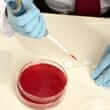
- Agar is a rich source of water-soluble, indigestible fiber. In the digestive tract, it absorbs water, increases bulk, and stimulates large bowel muscle contractions. Agar's most common therapeutic use has been as a laxative, and it has been used for decades as a daily treatment for chronic constipation. Agar is used in a variety of commercial applications, including production of cloth, paper, and cosmetics. More recently, agar has been used in scientific research laboratories to grow bacteria for use in experiments.
- Agar has been studied in several clinical trials as a possible treatment for newborn hyperbilirubinemia, a condition characterized by high levels of the pigment bilirubin in the blood. High levels of bilirubin may result in jaundice, which is a yellow color in the skin and whites of the eyes. Agar has also been investigated to determine if it might have a beneficial effect on glucose intolerance in type 2 diabetes mellitus.
Ingredients
Agar
Explore the available health information, treatment context, and integrative evidence for Agar.
Evidence Ledger
Grades describe the evidence for Agar relative to each listed condition or goal.
Background
References
- Blum D, Etienne J. Agar in control of hyperbilirubinemia. J Pediatr 1973;83(2):345.
View Abstract - Calvert R, Schneeman BO, Satchithanandam S, et al. Dietary fiber and intestinal adaptation: effects on intestinal and pancreatic digestive enzyme activities. Am J Clin Nutr 1985;41(6):1249-1256.
View Abstract - Dennery PA. Pharmacological interventions for the treatment of neonatal jaundice. Semin Neonatol 2002;7(2):111-119.
View Abstract - Ebbesen F, Moller J. Agar ingestion combined with phototherapy in jaundiced newborn infants. Biol Neonate 1977;31(1-2):7-9.
View Abstract - Holt S, Heading RC, Carter DC, et al. Effect of gel fibre on gastric emptying and absorption of glucose and paracetamol. Lancet 1979;1(8117):636-639.
View Abstract - Kaneko K, Nishida K, Yatsuda J, et al. Effect of fiber on protein, fat and calcium digestibilities and fecal cholesterol excretion. J Nutr Sci Vitaminol (Tokyo) 1986;32(3):317-325.
View Abstract - Maeda H, Yamamoto R, Hirao K, et al. Effects of agar (kanten) diet on obese patients with impaired glucose tolerance and type 2 diabetes. Diabetes Obes Metab 2005;7(1):40-46.
View Abstract - Meloni T, Costa S, Corti R, et al. Agar in control of hyperbilirubinemia of full-term newborn infants with erythrocyte G-6-PD deficiency. Biol Neonate 1978;34(5-6):295-298.
View Abstract - Minekus M, Jelier M, Xiao JZ, et al. Effect of partially hydrolyzed guar gum (PHGG) on the bioaccessibility of fat and cholesterol. Biosci Biotechnol Biochem 2005;69(5):932-938.
View Abstract - Odell GB, Gutcher GR, Whitington PF, et al. Enteral administration of agar as an effective adjunct to phototherapy of neonatal hyperbilirubinemia. Pediatr Res 1983;17(10):810-814.
View Abstract - Osada T, Shibuya T, Kodani T, et al. Obstructing small bowel bezoars due to an agar diet: diagnosis using double balloon enteroscopy. Intern Med 2008;47(7):617-620.
View Abstract - Sanaka M, Yamamoto T, Anjiki H, et al. Effects of agar and pectin on gastric emptying and post-prandial glycaemic profiles in healthy human volunteers. Clin Exp Pharmacol Physiol 2007;34(11):1151-1155.
View Abstract - Schellong G, Quakernack K, Fuhrmans B. [The influence of agar feeding on serum bilirubin in the physiologic jaundice of the newbron [sic] infant (author's transl)]. Z Geburtshilfe Perinatol 1974;178(1):34-39.
View Abstract - Tsai AC, Elias J, Kelley JJ, et al. Influence of certain dietary fibers on serum and tissue cholesterol levels in rats. J Nutr 1976;106(1):118-123.
View Abstract - Wilmshurst P, Crawley JC. The measurement of gastric transit time in obese subjects using 24Na and the effects of energy content and guar gum on gastric emptying and satiety. Br J Nutr 1980;44(1):1-6.
View Abstract